Showing posts with label doctrines. Show all posts

Thursday, January 21, 2021

Can we, as the sanctuary of God, be possessed by demons?

 Early Sunday morning found me doing my usual; listening to the morning devotional and playing Tiger Woods golf. As I listened to the devotional, the young man talked about how he did not know the Lord, but when he finally did, he became attached, in a sense, to Pastor James Robinson (he is also a television pastor,) as a youth minister.

James had apparently been talking about demons, and the young man admitted to Pastor James that he did not understand what was being said. This young man stated that James then had this youth minister and his wife come over to the house for homemade ice cream, and there James showed him this scripture.

Psalms 74:3 NASB Turn Your footsteps toward the perpetual ruins; The enemy has damaged everything within the sanctuary.

The young man thought about the scripture and what James had said, and then asked Pastor James, are you saying that we, as the sanctuary of God, are possessed by demons. To which James replied, well, what does it say? The premise was that we are.

At this point, I stopped everything for a moment, and asked the Father, if what he said was true. Here is what I began finger pecking on my phone.

In light of current events, that have us longing for Jesus' return, we are often directed to 2 Thessalonians 2:3. There we see the word apostasy or falling away. As I have learned from Dr. Andy Woods, it should read the departure or gathering.

The idea of falling away and gathering are opposing points of view, and open the door for doctrines of demons to be taught.

The Apostle Paul explained that anything outside of what he taught, was a doctrine of demons. There are always those, who for example, cling to the King James only – I have heard several of these say, it is the only authorized Bible we are to use. I am snickering because almost every King James Bible states that it is the authorized version, and it was, for King James, at that time; that does not make it the best and only version we should use. The twisted logic is, that to use anything else would be to fall away, and that is not the case.

As Dr. Woods explained, the Catholic church had the Greek word apostasia changed from departure to apostasy, so as to better convey the State Church's disdain for those leaving the flock and following after Protestantism.

Paul, in this letter to the church at Galatia, lays out how those who preach contrary to what he had taught should be accursed. What that looks like I do not know.

Galatians 1:6-9 NASB I am amazed that you are so quickly deserting Him who called you by the grace of Christ, for a different gospel; (7) which is really not another; only there are some who are disturbing you and want to distort the gospel of Christ. (8) But even if we, or an angel from heaven, should preach to you a gospel contrary to what we have preached to you, he is to be accursed! (9) As we have said before, so I say again now, if any man is preaching to you a gospel contrary to what you received, he is to be accursed!

Paul took this to the next step in his first letter to Timothy by explaining that there are doctrines of demons.

1 Timothy 4:1 NASB But the Spirit explicitly says that in later times some will fall away from the faith, paying attention to deceitful spirits and doctrines of demons,

What if one of those things were the demon possession of believers, as Pastor Robinson seems to have indicated?

First, let me say, I don't buy into the idea that a follower of Christ can be possessed. One of the few examples from scripture, that speaks about possession comes from Matthew 14: 43-45; there, it tells us that demons will come back to a clean and empty abode. That being the case, then let's make the assumption that having Christ in your life fills that empty space.

Another passage that concerns itself with demons comes from the Psalms.

They did not destroy the peoples, As the LORD commanded them, (35) But they mingled with the nations And learned their practices, (36) And served their idols, Which became a snare to them. (37) They even sacrificed their sons and their daughters to the demons, (38) And shed innocent blood, The blood of their sons and their daughters, Whom they sacrificed to the idols of Canaan; And the land was polluted with the blood. (39) Thus they became unclean in their practices And played the harlot in their deeds.
Psalms 106:34-39 NASB

Pay attention to how this is worded.

  1. “They did not destroy the peoples, As the LORD commanded them, (35) But they mingled with the nations ...”
  2. They “learned their practices, (36) And served their idols, Which became a snare to them.”
  3. They even sacrificed their sons and their daughters to the demons, (38) And shed innocent blood, The blood of their sons and their daughters, Whom they sacrificed to the idols of Canaan;”
  4. And because of their actions and the gods they followed, “the land was polluted with the blood.”
  5. And this is how “they became unclean in their practices,”

Paul, in writing to Timothy, spoke of “new converts” becoming snared by the devil.

1 Timothy 3:6-7 NASB and not a new convert, so that he will not become conceited and fall into the condemnation incurred by the devil. (7) And he must have a good reputation with those outside the church so that he will not fall into reproach and the snare of the devil.

In Paul's second letter to Timothy, he painted a picture of repentance by a believer (note that this time it says nothing about this person being a new convert,) which leads them to the Word of God and a release from the captivity of Satan.

The Lord's bond-servant must not be quarrelsome, but be kind to all, able to teach, patient when wronged, with gentleness correcting those who are in opposition, if perhaps God may grant them repentance leading to the knowledge of the truth, and they may come to their senses and escape from the snare of the devil, having been held captive by him to do his will. (2 Timothy 2:24-26 NASB)

Now, how did a believer become captive to Satan?

Paul tells us, that they were snared by Satan because they were in opposition to the Word of God, which Paul spoke. Paul, by the way, spoke from the Old Testament, just as Jesus did, so don't get all hung up on semantics.

I still don't see the word possessed, but it certainly spells out a life in which the person, inadvertently becomes a follower of Satan. No pun intended, but let me play the devil's advocate for a moment. Some may foolishly turn to a verse like we see in Mark's gospel.

When evening came, after the sun had set, they began bringing to Him all who were ill and those who were demon-possessed. (Mark 1:32 NASB)

Here, many who were demon-possessed were brought, and Jesus healed them. But were ANY Christ-followers, living in God's grace and mercy? The answer is NO, they were, at best, ALL Jews.

Now keep in mind, we are not talking about a person that is filled with Christ in this next reference.

Luke 4:33-35 NASB In the synagogue there was a man possessed by the spirit of an unclean demon, and he cried out with a loud voice, (34) "Let us alone! What business do we have with each other, Jesus of Nazareth? Have You come to destroy us? I know who You are--the Holy One of God!" (35) But Jesus rebuked him, saying, "Be quiet and come out of him!" And when the demon had thrown him down in the midst of the people, he came out of him without doing him any harm.

Where was Jesus when this event happened?

You got it, in the synagogue.

Why is it that we don't see anyone alarmed by what this Jewish man is saying?

Maybe it's because he isn't saying anything he hasn't already heard repeatedly. They did not want Jesus nor his message, and that becomes very clear to us in the gospels. It is a common belief that Jewish men talk in a caustic, argumentative manner all the time, and this day seemed no different.

What did the man say?

I will give you the first part, as it makes sense, to a degree. “Let us alone! What business do we have with each other, Jesus of Nazareth?” I would guess that any of these men would have gladly said this to Jesus. But the voice opened with a strange phrase and NO ONE caught it, “let us alone!”

So, who was being referred to?

To many in the audience, the voice was referring to the general crowd. But Jesus knew immediately that the voice was referring to the crowd of demons in the man.

What was the next thing the voice said?

“Have You come to destroy us? I know who You are--the Holy One of God!"

At this point, “Have You come to destroy us?” may have applied to the Jewish audience, specifically the Scribes, Pharisees, and Sadducees; but again, Jesus knew exactly who the voice was referring to, the demon crowd inside the man. When the demons said this, all bets were off. I know who you are – the Holy One of God!, this had to have sent a shock wave through the synagogue, as NONE of them dared say such a thing. Some might try to argue, Nicodemus would have said such a thing; really, and risk his family wealth and position as a Pharisee. Scripture proves that he was a closet believer, at best, because he came to Jesus by night.

You must know there were those possessed in the Old Testament, however, the Old Testament does not use the word to describe someone possessed, even once.

I can't find a thing that breaks this idea that a Christian, can be possessed unless of course, you choose to play with the devil, and I think it would be safe to say, you never knew the God you claim to know.

Monday, October 26, 2020

Rebuke not an Elder. 1 Timothy 5:1

 Let's start off this study into chapter five of 1 Timothy with a version I try to stay away from, the KJV.

1 Timothy 5:1 KJV Rebuke not an elder but entreat him as a father, and the younger men as brethren;

The KJV version has an air of respect as it speaks of an elder. The presumed idea is that older citizens should be thought of as elders. We would assume that this means someone with wisdom and qualifications coming from a life lived by a moral standard.

While this seems like a valid concept, we need to do our homework and look up words and their meanings.

Elder is the Greek word presbuteros. The meanings range from someone who is older, a title of dignity, and one of the classes of members to which the chief priest and the scribes and the elders belonged.

With the Christian church coming on the scene the word elder was applied to those “who were committed the direction and government of individual churches.”

I have to read 1 Timothy 5:1 in light of the entirety of Paul's letter to Timothy. It was written to instruct a young man on how to be a good pastor and church leader. So, my perception of an elder, in regards to this letter, is to see this person as someone within this body of believers, who is, in all likelihood, carrying the responsibility of being a church elder.

Now let's look at another translation, one I use frequently.

1 Timothy 5:1 NASB Do not sharply rebuke an older man, but rather appeal to him as a father, to the younger men as brothers,

The NASB changed the terminology to simply read, an older man. While it would be appropriate to treat older people with respect, the change in language removes the idea that this person is an elder within the church. This, in my mind, ignores the context and ignores the Greek word presbuteros which speaks of a leadership position. Most of the translations refer to older men, almost as if they are excluding presbuteros and the context of church leadership.

Let's consider a couple more words: appeal and entreat.

Both of these examples is the Greek word parakaleō which Strong's tells me, means to call near, that is, invite, invoke (by imploration, hortation or consolation): - beseech, call for, (be of good) comfort, desire, (give) exhort (-ation), intreat, pray.

I have never heard the word hortation intentionally used before. Because it is unfamiliar to me I looked it up in Webster's dictionary. It means the act of exhorting or giving advice.

Thayer's definitions of the word entreat, simply say, to call to one's side.

What I do with this information?

First, let's address this from the standpoint of a person having to be rebuked, whether they are an elder or merely an older person.

What have they done to deserve such a sharp rebuke?

As we see from 2 Timothy that the potential for being in opposition, to the teachings Paul left for Timothy to preach, is one answer. In the church, we call those teachings church doctrine. These doctrines are the foundation on which we build.

And in this way, I desire to preach where Christ has not been named, so as not to build on another person's foundation, (Romans 15:20 NET.)

Build, Do you mean that we can make it higher, cover it in gold, and promote the worship of the temple over God?

No, for the only thing being built is the body of Christ, based upon Jesus' work on the cross; and, even then the building only takes place as people are drawn to the Word the God, the life we are living – in love, and they themselves become established in the hope we have.

If someone is holding another viewpoint about these doctrines (although I am not sure that is theologically possible,) is it necessary to go nuclear on them?

“The Lord's bond-servant must not be quarrelsome, but be kind to all, able to teach, patient when wronged, with gentleness correcting those who are in opposition, if perhaps God may grant them repentance leading to the knowledge of the truth, and they may come to their senses and escape from the snare of the devil, having been held captive by him to do his will.” (2 Timothy 2:24-26 NASB)

The definition of entreat, as we saw above, indicates that we are to call this person to our side. I think the obvious fact is that, in the process of trying to correct or straighten this person out, it is done with a heart of love. Now, the complete stranger; that person who will NOT listen to you, you might have to handle differently. I have frequently said, especially when dealing with the grandchildren, why can't they simply respond when I calmly said stop, but since you have refused to comply we have now come to harsh actions.

My most recent experience came when a brother-in-Christ attempted to give an emotionally charged word to the church body I was attending. This speech was a failure from the moment that he had to announce to the crowd that he was worthy of listening to; everything he must have pictured in his mind floated away in anger and frustration, and he was asked to return to his seat, primarily because his word was inappropriate. Since the brother refused to listen and comply he ended up being escorted out of the church that day. He has never come back.

Paul, in 1 Timothy instructs the young pastor in these things in order to prevent the teaching of strange doctrines.

As I urged you upon my departure for Macedonia, remain on at Ephesus so that you may instruct certain men not to teach strange doctrines, (1 Timothy 1:3 NASB)

The word strange is the same as the Greek word used for doctrines. Thayer's Greek Definitions tells us that it can be seen as: to teach other doctrines; different doctrine; or, simply deviating from the established doctrine.

What do we have that confirms this?

Galatians 1:6-8 NASB

“I am amazed that you are so quickly deserting Him who called you by the grace of Christ, for a different gospel; which is really not another; only there are some who are disturbing you and want to distort the gospel of Christ. But even if we, or an angel from heaven, should preach to you a gospel contrary to what we have preached to you, he is to be accursed!”

To be accursed!” sounds rather serious, and is quite probably the impetus behind Paul's having to speak to Timothy about correcting a church leader.

If the church leader in question is a younger man, do you think Timothy has more freedom to speak aggressively?

I am not sure this is the answer, as it leans toward aggression.

“As we have said before, so I say again now if any man is preaching to you a gospel contrary to what you received, he is to be accursed!” (Galatians 1:9 NASB)

Accursed is the Greek anathema and according to the Word Study Dictionary means given up, or devoted to destruction for God's sake; given up to the curse and destruction.

In 1 Corinthians 5, though Paul does not mention the man's name, clearly the man has committed egregious sins, which are spelled out in the Torah. I think it is obvious that multiple attempts to confront and curtail this man's activities have failed; and that is where Paul comes into the story, as he has decided it is time to turn this man over to Satan so that his flesh may be destroyed but not his spirit.

I have decided to deliver such a one to Satan for the destruction of his flesh, so that his spirit may be saved in the day of the Lord Jesus.” (1 Corinthians 5:5 NASB)

You would think that turning someone over to Satan would be the absolute end of them. If that were the case, then one could argue that judgment was put into our hands. I happen to think handing judgment off to us would be a foolish decision, as we, regardless of the cross, are still broken people and will be so until Christ collects us back to Himself, changed.

all judgment has been given to the Son” (John 5:22b).

There is no doubt that the man's flesh dies in this story, but there is also no doubt that the man has the opportunity to be saved in the day of the Lord. I use the term opportunity because Paul suggests that he may be saved. That word may is rather open-ended and can be taken two ways; one is said with affirmation, but we don't exactly get that sense here. The other is an opportunity extended, and whether it is accepted or not is not known to us.

Consider these verses.

“But you, beloved, building yourselves up on your most holy faith, praying in the Holy Spirit, keep yourselves in the love of God, waiting anxiously for the mercy of our Lord Jesus Christ to eternal life. And have mercy on some, who are doubting; save others, snatching them out of the fire; and on some have mercy with fear, hating even the garment polluted by the flesh.” (Jude 1:20-23 NASB)

If anyone sees his brother committing a sin not leading to death, he shall ask and God will for him give life to those who commit sin not leading to death. There is a sin leading to death; I do not say that he should make a request for this. All unrighteousness is sin, and there is a sin not leading to death. We know that no one who is born of God sins, but He who was born of God keeps him, and the evil one does not touch him.” (1 John 5:16-18 NASB)

“My brethren, if any among you strays from the truth and one turns him back, let him know that he who turns a sinner from the error of his way will save his soul from death and will cover a multitude of sins.”
(James 5:19-20 NASB)

One of the struggles I have with this subject of dealing with an elder is how entrenched they can be within the church, often to the degree that others will quickly come in agreement and side with this person to protect them. I watched it happen repeatedly on Monday mornings.

Previously, I told you that I had left just such a Bible Study. I left because I rarely learned anything while there (It was definitely more a relational gathering of men,) for as the speaker would begin, my heart would scream out, that is wrong and I would begin to search out scriptures that refuted the speakers topic, or his interpretation of what he was preaching that day. I think that addressing leaders like this is either a bravery issue, or it's a skillset; and I feel like I have neither.

I appreciate what Paul told Timothy to do when he said,

“Until I come, give attention to the public reading of Scripture, to exhortation and teaching. (14) Do not neglect the spiritual gift within you, which was bestowed on you through prophetic utterance with the laying on of hands by the presbytery. (15) Give your complete attention to these matters(NLT,) so that your progress will be evident to all. (16) Pay close attention to yourself and to your teaching; persevere in these things, for as you do this you will ensure salvation both for yourself and for those who hear you.” 1 Timothy 4:13-16 NASB

To simplify this I will turn it into bullet points.

  • Give attention to the public reading of Scripture.
  • Give attention: to exhortation and teaching.
  • Do not neglect the spiritual gift within you.

So Paul is telling Timothy, no matter what, keep this information I have given you, alive.

Now if we are talking about an elder in the church, or we are talking about an older man, that has spent his life in the Word of God, you are NOT to crush the man's spirit as you address some error he may be spreading. (That is easier said than done.)

As we see from 2 Timothy, the potential for being in opposition, to the teachings Paul left for Timothy to preach, is one answer. Secondly, in the church, we call those teachings church doctrine. These doctrines are the foundation on which we build.

“The Lord's bond-servant must not be quarrelsome, but be kind to all, able to teach, patient when wronged, with gentleness correcting those who are in opposition, if perhaps God may grant them repentance leading to the knowledge of the truth, and they may come to their senses and escape from the snare of the devil, having been held captive by him to do his will.” (2 Timothy 2:24-26 NASB)

See, I have to look at this from a context point of view. In chapter four of this letter to Timothy, Paul addresses how some will leave the faith, but return with false teaching. These teachings might sound right, but they are not. Having spent some time in the faith movement, there was a push to get God to bring you monetary and physical gain. God is not interested in your gains, He is interested in your heart. So, is it possible that this was demonic teaching that crept in? Possibly.

We are not quite done.

Do not address an older man harshly but appeal to him as a father. Speak to younger men as brothers, older women as mothers, and younger women as sisters -- with complete purity. (1 Timothy 5:1-2 NET.)

Notice how this version says, appeal to him as a father. Hopefully, you had a great father-son relationship and can understand this. Additionally, it does speak to the pastor addressing younger men as brothers and, older women as mothers, whom you would probably, like mine, never cuss in front of. And lastly, even though the context of the message is to straighten out twisted and false teachings, your approach with younger women is with the same respect you would give a sister. Not necessarily a sibling, for many would confess that they don't treat their siblings well. Paul, in this translation, says your relationship is to be with complete purity.

Wednesday, August 19, 2020

God, who desires all men to be saved. 1Ti 2:1-15

 How did we end 1 Timothy chapter one? With a bang as Paul points out two false teachers within the church. Here is what he said.

Hymenaeus and Alexander, whom I have handed over to Satan, so that they will be taught not to blaspheme.”

Read what Paul said to Timothy as he described the details of what these two were doing.

  • They were teaching contrary to the truth, teaching strange doctrines.
    • As Eugene Peterson's message states, they were occupying themselves and others, with legends, fables, and myths;
    • and, they were paying far too much attention to myths and endless genealogies, these genealogies merely give rise to mere speculation rather than furthering the administration of God which is by faith.

    First off, genealogies seemed to be vitally important to the Jewish community, we can see an aspect of this in Matthew's gospel.

    Matthew 1:1 THE BOOK of the ancestry (genealogy) of Jesus Christ (the Messiah, the Anointed), the son (descendant) of David, the son (descendant) of Abraham. [Ps. 132:11; Isa. 11:1.] (AMPLIFIED Bible)

    The genealogy proved the heritage of Jesus Christ. For example:

    Psalms 132:11 NASB The LORD has sworn to David A truth from which He will not turn back: "Of the fruit of your body I will set upon your throne.

    This was important to the Jewish community, and in scripture, we are given two different lines, both of which establish Jesus as the son of David, the son of Joseph and Mary, and therefore, the Son of God. (Yes, I took some liberties in saying it this way, and I was trying to make a point about how, for the most part, is that genealogies, for us, are pointless. Consider when Herod was told that an entourage of wise men was coming toward Jerusalem. Having learned that they were looking for a recently born king of the Jews, he called the chief priests and scribes, and asked them, is this true. Because of what Psalms 132:11, and what the other prophets had said, they affirmed that Yahshua, the Messiah, would have been born in Bethlehem, however, we will not accept this child nor worship him. Herod, on the basis of two sets of witnesses, had all the boys in the region, under the age of twelve, killed. What does this say to you about the genealogies?)

    But what did Paul say?

    He said that these two, Hymenaeus and Alexander, were blaspheming – God.

    Based upon what we know (1 Timothy 1:3,4,) where do you see the act of blaspheming?

    Let's ignore the genealogies for now, and focus on the other two points.

    1. They were teaching contrary to the truth, and or, teaching strange doctrines.
      1. The second thing that could be attributed to their blasphemy, would be what Eugene Peterson's message states, they were occupying themselves and others, with legends, fables, and myths.

        Having said all this, through and to Timothy, how does pull the young man, and his audience, back on track?

        He reiterates what truth is, and thus we start Timothy chapter two.

        1 Timothy 2:1-2 NASB First of all, then, I urge that entreaties and prayers, petitions and thanksgivings, be made on behalf of all men, (2) for kings and all who are in authority, so that we may lead a tranquil and quiet life in all godliness and dignity.

        Alright, what is an entreaty?

        It is the Greek word deēsis and means a petition: - prayer, request, supplication. The dictionary says it is to make an earnest petition or request.

        Either I am missing something, or I just can't see the logic of using a fancy word, only to say a moment later, “and prayers, petitions.”

        The New Living Translation puts it like this.

        I urge you, first of all, to pray for all people.

        Ask God to help them;

        intercede on their behalf,

        and give thanks for them.

        Pray this way for kings and all who are in authority so that we can live peaceful and quiet lives marked by godliness and dignity.

        Eugene Peterson's Message conveys 1 Timothy 2:1-2 in this manner.

        The first thing I want you to do is pray.

        Pray every way you know how,

        for everyone you know.

        This last portion of Peterson's Message is especially critical today.

        Pray especially for rulers and their governments to rule well so we can be quietly about our business of living simply, in humble contemplation.

        The next two verses continue the necessity and logic of prayer.

        1 Timothy 2:3-4 NET. Such prayer for all is good and welcomed before God our Savior, (4) since he wants all people to be saved and to come to a knowledge of the truth.

        Why?

        Because he wants all people to be saved and to come to a knowledge of the truth.

        1 Timothy 2:5-6 NET. For there is one God and one intermediary between God and humanity, Christ Jesus, himself human, (6) who gave himself as a ransom for all, revealing God's purpose at his appointed time.

        Absorb these statements for a moment.

        • God wants all people to be saved and come to a knowledge of the truth.
        • There is one God.
        • There is one intermediary between God and humanity, Christ Jesus.
        • Jesus Christ is human.
        • Jesus Christ, who gave himself as a ransom for all.
        • So that Jesus Christ could reveal God's purpose at His appointed time.

        Keep in mind that Paul is writing to Timothy, I suspect to encourage him. In that encouragement he says, the things above, some of the most precise statements about who He is; these statements are a definition of His nature and His character.

        When I was 23 I had a dream/vision of Jesus. He laid out my entire life before me. I thought I will never forget this and so I did not write anything down. All I could remember of His being there was that I was filled with joy. Years later, after a horrendous marriage and a loss of everything, including my hope and joy, I was reading in the book of Numbers chapter 12, where it speaks about the attempted mutiny by Aaron and Miriam against Moses. God spoke to Moses and said,

        Numbers 12:6 NET. The LORD said, "Hear now my words: If there is a prophet among you, I the LORD will make myself known to him in a vision; I will speak with him in a dream.

        Life continued with its twists and turns. The hope was restored one day, many years later, when I went to a prophecy conference. Sitting in the audience, the speaker that night pointed at me, and said, you have gone through three destructive phases in your life. God is saying to you, the destruction is done, and nothing will impact you in that manner again. There were other things said, but I do not remember them all. What I remember is that I felt like God loved and cared about me. This prophetic word did not speak to what I saw in Numbers 12:6, and I wondered what God had in store for me as time progressed. I never wanted to be a pastor, as I could not endure the responsibility of other people's lives. It has been years, and I post almost everything I write to the internet. But about two years ago the dream came true as I became the leader of a small Bible Study group.

        The point is, that God has a plan and that will be fulfilled in His timeline.

        Paul, when he was Saul, may not have seen teaching direction coming, because he had been aligning himself to be a Pharisee, not a teacher of God's grace and mercy, but here it is.

        1 Timothy 2:7 NET. For this I was appointed a preacher and apostle -- I am telling the truth; I am not lying -- and a teacher of the Gentiles in faith and truth.

        When you read about Paul's life in the book of Acts what you see is a Jewish follower of Christ going to synagogues with every turn. Is that a bad thing? Not necessarily, as Paul did what he knew best, and he preached Jesus from the Tanakh. In the course of teaching and preaching, Gentiles began to join the ranks. However, it was not until the harassment from the Jews escalated that we see Paul saying,

        It was necessary that we first preach the word of God to you Jews. But since you have rejected it and judged yourselves unworthy of eternal life, we will offer it to the Gentiles. (Acts 13:46b NLT)

        To be honest, for me, most of the rest of this chapter has become nothing less than an entanglement. Maybe what Paul preaches here is a command from God, if so then rebellion on the part of some, has over time, made it impossible to enforce.

        1 Timothy 2:8-15 NLT  In every place of worship, I want men to pray with holy hands lifted up to God, free from anger and controversy.  (9)  And I want women to be modest in their appearance. They should wear decent and appropriate clothing and not draw attention to themselves by the way they fix their hair or by wearing gold or pearls or expensive clothes.  (10)  For women who claim to be devoted to God should make themselves attractive by the good things they do.  (11)  Women should learn quietly and submissively.  (12)  I do not let women teach men or have authority over them. Let them listen quietly.  (13)  For God made Adam first, and afterward he made Eve.  (14)  And it was not Adam who was deceived by Satan. The woman was deceived, and sin was the result.  (15)  But women will be saved through childbearing, assuming they continue to live in faith, love, holiness, and modesty.

        • In every place of worship, I want men to pray with holy hands lifted up to God, free from anger and controversy.”

          Starting with verse nine, Paul speaks to women. Now there might be a relational issue, but it is NOT often that you see women dressing so gaudy.

          • “And I want women to be modest in their appearance. They should wear decent and appropriate clothing and not draw attention to themselves by the way they fix their hair or by wearing gold or pearls or expensive clothes.  (10)  For women who claim to be devoted to God should make themselves attractive by the good things they do.  (11)  Women should learn quietly and submissively.

          Verses twelve through fifteen are unusual, to say the least. Having been cast aside and practically made slaves, women have fought back, demanding respect. I agree a male and female lumberjack should get the same pay. But I do struggle with this idea of women teaching men. Perhaps someone like Joyce Meyers could shut me up.

          • “I do not let women teach men or have authority over them. Let them listen quietly.  (13)  For God made Adam first, and afterward, he made Eve.  (14)  And it was not Adam who was deceived by Satan. The woman was deceived, and sin was the result.  (15)  But women will be saved through childbearing, assuming they continue to live in faith, love, holiness, and modesty.

          Paul's reason may not seem logical to most, and, if you think about it, Adam was standing right there, listening to everything the serpent was saying to his woman. For this to make sense, you may have to go back to the creation of man.

          In Genesis 1:26-30, it appears that God made man and woman, but there is more definition to come; and it is possible that this is nothing than a spiritual state, not so different from the angels. The biggest clue we have to understand this creation scenario comes from verse 27, which reads:

          God created man in His own image, in the image of God He created him; male and female He created them. Genesis 1:27 NASB

          John's gospel tells us this:

          "God is spirit, and those who worship Him must worship in spirit and truth." John 4:24 NASB

          So the initial creation of both the male and female was a spirit, just as every aspect of the trinity.

          Genesis 1:26-30 NASB Then God said, "Let Us make man in Our image, according to Our likeness; and let them rule over the fish of the sea and over the birds of the sky and over the cattle and over all the earth, and over every creeping thing that creeps on the earth." (27) God created man in His own image, in the image of God He created him; male and female He created them. (28) God blessed them; and God said to them, "Be fruitful and multiply, and fill the earth, and subdue it; and rule over the fish of the sea and over the birds of the sky and over every living thing that moves on the earth." (29) Then God said, "Behold, I have given you every plant yielding seed that is on the surface of all the earth, and every tree which has fruit yielding seed; it shall be food for you; (30) and to every beast of the earth and to every bird of the sky and to every thing that moves on the earth which has life, I have given every green plant for food"; and it was so.

          Our second introduction to creation comes from Genesis chapter two.

          Then the LORD God formed man of dust from the ground, and breathed into his nostrils the breath of life, and man became a living being. The LORD God planted a garden toward the east, in Eden; and there He placed the man whom He had formed. (Genesis 2:7-8 NASB)

          Here, we do not see the woman, so where is she?

          Not formed yet.

          And where does God put the man?

          Then the LORD God took the man and put him into the garden of Eden to cultivate it and keep it. The LORD God commanded the man, saying, "From any tree of the garden you may eat freely; but from the tree of the knowledge of good and evil you shall not eat, for in the day that you eat from it you will surely die." (Genesis 2:15-17 NASB)

          God placed the man in the garden, told the man about the tree, and gave him the only set of instructions necessary.

          It quickly became obvious that something was missing, companionship, so God made animals. Well, that was not the answer, and so He makes a woman.

          So the LORD God caused a deep sleep to fall upon the man, and he slept; then He took one of his ribs and closed up the flesh at that place. The LORD God fashioned into a woman the rib which He had taken from the man, and brought her to the man. (Genesis 2:21-22 NASB)

          So where was the woman when passed out instructions?

          Not formed yet.

          So who then told the woman not to eat from the tree in the center of the garden?

          The one person, who had previously been given dominion and the command to subdue the earth and all in it, Adam.

          “God blessed them: God said to them, "Be fruitful, multiply, fill the earth and subdue it. Rule over the fish in the sea, the birds in the air and every living creature that crawls on the earth."(Genesis 1:28 CJB)

          To the legalistic, who read this and assume that the “them” would be the man and the woman. How quickly we forget that the earth is also filled with animals and flying things, all, like the serpent, had the ability to communicate and had no fear of man. (Oh, yes, this is a very scriptural thing.)

          Subdue – Gk, kâbash meaning to tread down; to conquer, subjugate, subdue, and bring into subjection.

          Whether you like the word subdue or not is irrelevant, for the man was to bring his woman into subjection, in this case, to the Word of God. The word dominion has comparable meanings.

          We never see Adam dominating, in a negative manner, his woman; and, I suppose that is why Paul's directions toward women in the church are difficult to wrap the mind around.

          So when we see the serpent, in chapter three, taunts the woman with “Indeed, has God said,” perhaps you can understand that the challenge/question comes more from the idea that Eve did not hear God speak the word, it came to her from Adam's mouth; and how can I truly know that he would not lie to me in order to control me.

          “Now the serpent was more crafty than any beast of the field which the LORD God had made. And he said to the woman, "Indeed, has God said, 'You shall not eat from any tree of the garden'?" (Genesis 3:1 NASB)

          Do you see the subtlety and deceptiveness in this transaction?

          These were NOT broken people as yet, and therefore Satan has to introduce possibility, probability, doubt; and for Adam, a treasonous motive – the potential that God has not given you all the power that He promised.

          Because if, standing there, knowing full well that God did give those instructions, then what kind of evil went through Adam's mind?

          Monday, February 13, 2017

          Will the old and new Jerusalem exist at the same time? And, If so, where?

          One of the questions that came up recently; an offshoot of Dake's commentary on the Millennium, was, "Will the old and new Jerusalem exist at the same time? And, If so, where?"
          The short answer is No; the where is in proximity to where the old Jerusalem is currently. (Keep in mind the overall dimensions, which are 1500 miles square; significantly surpassing the current day Jerusalem.)
          Because the simple answer is rarely enough and leaves so many questions unanswered, let's try an in depth response.
          To answer the first part of the question let's start with old Jerusalem.
          • At some point, the last temple, constructed by man, must be built.
          This cannot be called the last Jerusalem because it is not. The new Jerusalem, not made with hands will come down, but there is a rather accurate timing for that – sometime after the time of wrath, we love to refer to as the “The Tribulation.”
          Has that happened yet? The short answer is no.
          The discussions about where to put the new temple range from the temple mount to the city of David, a short distance away. Oh, make no mistake about it, the temple will be built. All the plans are in place, and the preparations have been made. But, there is a huge problem. If the Jews decide that it must be built on the temple mount, the Muslims have their Mosque there and have claimed possession. What does that mean? It means that God is going to have to do something drastic.
          Ezekiel 39 shows us an extreme possibility.
          Ezekiel 39:1-6 NASB "And you, son of man, prophesy against Gog and say, 'Thus says the Lord GOD, "Behold, I am against you, O Gog, prince of Rosh, Meshech and Tubal; 2) and I will turn you around, drive you on, take you up from the remotest parts of the north and bring you against the mountains of Israel. 3) "I will strike your bow from your left hand and dash down your arrows from your right hand. 4) "You will fall on the mountains of Israel, you and all your troops and the peoples who are with you; I will give you as food to every kind of predatory bird and beast of the field. 5) "You will fall on the open field; for it is I who have spoken," declares the Lord GOD. 6) "And I will send fire upon Magog and those who inhabit the coastlands in safety, and they will know that I am the LORD.
          Let's assume that Gog is Vladimir Putin of Russia (There are enough commentary and evidence to motivate some logical thought in that direction.) God, it seems, will turn Gog around, and drive him, and his forces, against the mountains of Israel. As you can see in verse 3, God will strike the bow from his hand and “you will fall on the mountains of Israel, along with all your troops.
          How might that happen, seeing as Israel is outgunned?
          The answer is found in verse 6, where it says, “I will send fire upon Magog ..
          The Hebrew word for send is to shoot out, but a fire is a fire. How many many ways has God sent fire upon the earth? Several when you think about it. Sodom and Gomorrah come to mind. Archaeologists have found burnt, encapsulated sulfur.
           The photos and information below come from http://www.arkdiscovery.com/sodom_&_gomorrah.htm

          “Above at left is brimstone with a burned, hardened shell that has the unburned sulfur inside, and next to it is brimstone without a burned shell. The photo at right is a shell or capsule with unburned sulfur inside. Tiny crystals are on its surface which was formed when the sulfur was burning and was in a liquid state, then it burned out.”
          During the days of Samuel, God sent lightning upon the Philistines. Considering the heat, voltage and God's ability to direct a lightning strike, this would be deadly. So, the first thing we should be looking for is some change that allows for the temple to be built.
          Back to the original question: “Will the old and new Jerusalem exist at the same time? If so, where?
          The obvious point to make here is that during the time of this modern day temple's existence, Jerusalem will exist. However, the destruction of Jerusalem is spelled out plainly in scripture.
          Daniel 9:26 NASB "Then after the sixty-two weeks the Messiah will be cut off and have nothing, and the people of the prince who is to come will destroy the city and the sanctuary. And its end will come with a flood; even to the end there will be war; desolations are determined.
          One of the men from Bible study pointed out how he had read the Bible and found that instances of destruction were specifically for the moment and the nation in question. He told how this makes understanding the Bible and particularly prophecy very confusing for him.
          The book/prophecy of Daniel is one of those instances where the destruction is both eminent and yet for the futureIn this case, Israel was destroyed, and yet, it also speaks of time yet to come.
          I thought, much like the man at Bible study, how do you know the difference?
          Again, the short answer is:
          You must look at the context; see if there are other, more modern applications, and, in the case of Daniel, there are. You need to look at an interlinear concordance and find out if there are multiple applications of a particular word; in so doing you may find that the translation you enjoy does a frail job of painting an appropriate picture. I would consider looking at a variety of translations, simply because one while being a step down intellectually, may convey the heart of God more clearly. (Keep in mind that the Apostle John told us God is love and that there is no darkness in Him. In short, His nature is mercy and Jesus lived that out in front of many.)
          The The Ultimate Cross-Reference Treasury tells us that the words “Then after, or, And after” indicate:
          that two events are stated to take place after the sixty-nine weeks have concluded: (1) the death of Messiah; (2) the destruction of Jerusalem. These cannot be understood to take place during the Seventieth Week, for the Crucifixion would cut the time too short, and the destruction of Jerusalem would stretch the time too long to be accommodated within the seven-year time frame of the Seventieth Week were it to be considered contiguous with the Sixty-ninth Week. This absolutely proves, therefore, that there is a gap of unannounced duration between the Sixty-ninth and the Seventieth Week specifically stated right here in Scripture. Further proof is that Jesus himself placed events of Daniel’s Seventieth Week to a time just prior to his Second Advent (Mat_24:5Mat_24:15Luk_2:10; Joh_5:39; Rom_1:4.”)
          Unfortunately, few would know this.
          What else do we have from scripture that foretells the destruction of Jerusalem?
          Ezekiel 32:12 (Darby) By the swords of the mighty will I cause thy multitude to fall: the terrible of the nations are they all: and they shall spoil the pride of Egypt, and all the multitude thereof shall be destroyed.
          A point of possible confusion would be the aspect where it says, “they shall spoil the pride of Egypt,” What then, would be the pride of Egypt? The answer to the question lies in Joseph, the son of Jacob, the Father of the nation of Israel. In Egypt, Israel became a mighty nation, in terms of numbers.
          A clear example comes from Daniel 11.
          Daniel 11:16 CEV The king who invaded from the north will do as he pleases, and he will even capture and destroy the holy land.
          Daniel 9:2 also speaks of the desolations of Jerusalem.
          Daniel 9:2 NASB in the first year of his reign, I, Daniel, observed in the books the number of the years which was revealed as the word of the LORD to Jeremiah the prophet for the completion of the desolations of Jerusalem, namely, seventy years.
          This is another of those passages that require that you do your homework; for we have only accomplished 69 weeks. The emergence of the seventieth week has been on hold for over two thousand years. I can prove this out, but it is time consuming and lengthy, so I won't, but I will give you a clue. Daniel, in chapter 9, verse 24 began to receive the explanation of all this.
          Take the time to look at these verses, as they too reflect the destruction of Israel. This has everything to do Israel's rebellion against the Lord.
          Jeremiah 11:11 NASB Therefore thus says the LORD, "Behold I am bringing disaster on them which they will not be able to escape; though they will cry to Me, yet I will not listen to them.
          Jeremiah 50:29 NASB "Summon many against Babylon, All those who bend the bow: Encamp against her on every side, Let there be no escape. Repay her according to her work; According to all that she has done, so do to her; For she has become arrogant against the LORD, Against the Holy One of Israel.
          Ezekiel 6:3-10 NASB and say, 'Mountains of Israel, listen to the word of the Lord GOD! Thus says the Lord GOD to the mountains, the hills, the ravines and the valleys: "Behold, I Myself am going to bring a sword on you, and I will destroy your high places. 4) "So your altars will become desolate and your incense altars will be smashed; and I will make your slain fall in front of your idols. 5) "I will also lay the dead bodies of the sons of Israel in front of their idols; and I will scatter your bones around your altars. 6) "In all your dwellings, cities will become waste and the high places will be desolate, that your altars may become waste and desolate, your idols may be broken and brought to an end, your incense altars may be cut down, and your works may be blotted out. 7) "The slain will fall among you, and you will know that I am the LORD. 8) "However, I will leave a remnant, for you will have those who escaped the sword among the nations when you are scattered among the countries. 9) "Then those of you who escape will remember Me among the nations to which they will be carried captive, how I have been hurt by their adulterous hearts which turned away from Me, and by their eyes which played the harlot after their idols; and they will loathe themselves in their own sight for the evils which they have committed, for all their abominations. 10) "Then they will know that I am the LORD; I have not said in vain that I would inflict this disaster on them."'
          We can be fairly confident that Israel will succumb to oppressors. But, God will leave a remnant bring down a New Jerusalem, not built with hands. Considering the size of the new Jerusalem – 1500 square miles, it is hard to imagine where something of this size would go, as there not enough level land on which to place such a structure. Well, there are passages that answer how that will happen.
          Isaiah 40:4-5 NASB "Let every valley be lifted up, And every mountain and hill be made low; And let the rough ground become a plain, And the rugged terrain a broad valley; 5) Then the glory of the LORD will be revealed, And all flesh will see it together; For the mouth of the LORD has spoken."
          Zechariah 4:7 NASB 'What are you, O great mountain? Before Zerubbabel you will become a plain; and he will bring forth the top stone with shouts of "Grace, grace to it!"'"
          While many will argue the context of the previous verses, the context of the next is beyond debate as it speaks about the time when Jesus touches his feet upon the mount of Olives once again. Then the new city comes down, upon level ground.
          Zechariah 14:10 NASB All the land will be changed into a plain from Geba to Rimmon south of Jerusalem; but Jerusalem will rise and remain on its site from Benjamin's Gate as far as the place of the First Gate to the Corner Gate, and from the Tower of Hananel to the king's wine presses.
          This entire scenario is not typically one that draws, as scripture says, all men unto Christ. It is more educational, or perhaps even correctional. Most of these topics come out of conversations, most of which are where some leader; a self-appointed group pastor, makes incorrect and false statements. They attempt to back up their claims by taking scripture out of context and mixing timings and scenarios to create an environment that you won't find in scripture. In an ideal environment, this could easily be conveyed to many at one time, or directly to the individual who is espousing improper teachings.
          Scripturally, the appropriate way of dealing with “abusers” within the church, is to first go to the person. I sit with these men two days a week. I have challenged their teachings to the point that I stormed out of the room and stayed away for six months. Nothing changed. At one venue, which still meets at a large church, I asked the pastor to come sit in on the meetings, because they are seriously out of control. If the next and appropriate step is to bring in the elders of the church to address the problem child; in this case, I do not see the elders having an interest in knowing there is a problem or fixing it.
          So, that is why I write, because I think there are others who believe inappropriate teachings or are seriously confused. My hope is that we, as a church body, can come into an agreement; not with me, although that would be nice, however, it is vital that we agree with the Word of God; the Holy Spirit.

          Sunday, February 5, 2017

          The Bema seat of Christ; what is it? - 2 Corinthians 5:10

          For we must all appear before the judgment seat of Christ
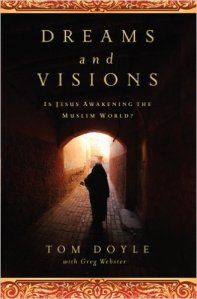
          We hear this phrase constantly in religious circles. It is an aspect of our mean-spirited nature, and is often used to obtain compliance or to get us, the body, to do more, especially when it comes to “soul winning.” You know what? God can win souls just fine without us. In many cases He invades the dreams of those He is trying to persuade, and from what I have seen, it works quite well. If you are interested here is a link to Amazon.com and Tom Doyle's book about such things.
          Dreams and Visions, by Tom Doyle

          The passage that gives us this reality check about judgment upon followers of Christ is:
          2 Corinthians 5:10 NASB 10) For we must all appear before the judgment seat of Christ, so that each one may be recompensed for his deeds in the body, according to what he has done, whether good or bad.
          As usual, we need to break this down.
          • For we all must appear...”
          The consensus, as I perceive it, at least from the leaders who feel we need to be reminded of how bad we are, implies that lacking enough merit, we are going to hell.
          This heavy handed attitude instantly conveys some huge assumptions.
          1. A major assumption is that there is some separate judgment, in which you stand fearfully before a throne, where Jesus/God looms ominously over you.
          2. This angry portrayal also assumes that this judgment is a win or lose situation where you can be rejected from heaven because you did not witness enough, or act like some great evangelist.
          3. We also convey the idea that God is mad at you and awaiting an opportunity to come crashing down on you, a person that He calls beloved.
          Do any of these make sense? The answer is NO; however, we do not base our theology on whether things make sense to us personally or not.
          Don't get me wrong, the Word of God was meant to be understood. Since we are deeply entrenched in selfishness anything or anyone telling us we are wrong tends not to make sense, because we, at that moment, are choosing not to understand. It is a choice, or we are blinded by the veil Satan puts over us, preventing us from seeing the truth.
          The idea that we must appear, as it stands, sounds more like a warrant for our arrest; an order that comes with a detrimental result. If you look at the word judgment in Greek, you find a much less threatening situation. One source, The Complete Word Study Dictionary tells us that it is: necessary, has need of, or is inevitable in the nature of things.
          So if I reread this with Greek eyes, 1Cor 5:10 could just as easily say:
          It is necessary, and, inevitable in the nature of things that we stand before Christ.
          • "..before the judgment seat of Christ.”
          Moffatt's translation puts it this way: “for we have all to appear without disguise before the tribunal of Christ, each to be requited for what he has done with his body, well or ill.
          What does it mean to be requited?
          Webster's dictionary gives us: REQUI'TEDRepaidrecompensedrewarded.
          Does this sound like you are being judged? Not hardly, but as we shall see, you can't take that sin-ridden body into the new kingdom. So, we apparently leave our bodies at the door (so to speak.)
          • If I merely focus on the word judgment for a moment, I think we would all agree that it sounds ominous, but, as we have seen, it is a time of rewarding and repayment. The Greek word is bḗma and means “A step, i.e., a pace or footstep. By implication any elevated place to which the ascent is by steps.” (WSD)
          We have another huge piece of information that can help us understand what and when this judgment/Bema seat is:
          1 Corinthians 15:50-52 NASB 50) Now I say this, brethren, that flesh, and blood cannot inherit the kingdom of God; nor does the perishable inherit the imperishable. 51) Behold, I tell you a mystery; we will not all sleep, but we will all be changed, 52) in a moment, in the twinkling of an eye, at the last trumpet; for the trumpet will sound, and the dead will be raised imperishable, and we will be changed.
          Consider what this says:
          • First - ”Flesh and blood cannot inherit the kingdom of God;”
          As we sit here reading this, we are flesh and blood. It is evident that we cannot take these bodies, as they are, into heaven.
          Considering that we cannot take these bodies, with their built-in propensity to sin, why even have this conversation? We should understand by now, that Adam's treasonous choice caused us all to inherit something comparable to a damaged DNA string. In other words, you are not going to shake the effects this has on you. You can, however, overcome the influences of the sinful nature through the blood of Jesus Christ when you accept His life as yours.
          • Secondly - "nor does the perishable inherit the imperishable.”
          An obvious observation, but the opposite of perishable is imperishable, and vice-a-versa. What does that mean? Slightly more than merely being subject to physical death. We, without the promise of life with the Father, are subject to an eternal perishing; a death we were not meant to endure. Hell, the fire that burns eternally was intended for Satan and his angels/followers.
          • Third - “Behold, I tell you a mystery; we will not all sleep, but we will all be changed,
            A mystery? Is death a mystery? Not really, for everyone dies and we all know that. Some may try to evade its effects through cryogenics, but that has not worked as yet. Since the obvious factor is that everyone will die, except for those who are alive when Christ returns; then there has to be another implication; that this change will happen before our transference into heaven.
          So where is the mystery? Perhaps it lies in the idea that the definition of death has changed to sleep, and that without “sleeping” we will migrate into the kingdom of God.
          • Fourth - “ in a moment, in the twinkling of an eye, at the last trumpet;”
          Currently, the Greek word we use to create the idea of the rapture is harpazo. It means a snatching away. Rapture, on the other hand, has no associated word in the Greek. We get our word rapture from the Latin Vulgate which uses the word rapio. Rapture also conveys the idea of a mass removal of Christ followers from the earth.
          When is the last trumpet?
          Obviously, there are several. Matthew 24 tells us of one:
          Matthew 24:29-31 NASB "But immediately after the tribulation of those days THE SUN WILL BE DARKENED, AND THE MOON WILL NOT GIVE ITS LIGHT, AND THE STARS WILL FALL from the sky, and the powers of the heavens will be shaken. 30) "And then the sign of the Son of Man will appear in the sky, and then all the tribes of the earth will mourn, and they will see the SON OF MAN COMING ON THE CLOUDS OF THE SKY with power and great glory. 31) "And He will send forth His angels with A GREAT TRUMPET, and THEY WILL GATHER TOGETHER His elect from the four winds, from one end of the sky to the other.
          I can quickly determine that this is not the last trumpet call because of the phrase, “..immediately after the tribulation of those days..” That statement places this event approximately seven years after the rapture of the church. While it may be the last trumpet, it is not the trumpet blast being referred to.
          There is one other clue to solving any mystery we find here, and that is the fact that the angels from God will gather His elect. These are Jews being spoken of here. Don't make the foolish assumption that everything the Apostle Paul said and did was directed at Gentiles, as the intentional preaching of the gospel to the Gentiles did not become a push until he made the plea to take his case to Caesar, in Rome.
          What do I take away from all this?
          That the bema seat of Christ:
          • Maybe a seat of high position, that carries authority.
          • The nature of this place and time is to reward not punish.
          • It has much to do with leaving our broken natures behind.
          • It will happen in that twinkling of an eye.
          • And, as 1 Corinthians 15:50-52 tells us, we are not taken our broken, selfishness into heaven with us. God will not allow that in there.
          So, all of it gets burned up, attitudes, beliefs, traditions, and brokenness, in a moment. If you notice anything it will be the freedom and normalcy. Something we have never experienced.

          Featured Post

          Will we have to go through the tribulation?

          Then I heard a loud voice from the temple, saying to the seven angels, "Go and pour out on the earth the seven bowls of the wrath of...