What you will find here are thoughts and commentary on what I happen to be studying. As for me, I have two daughters who have grown up without me. Education wise, I have two AS degrees, one being in Horticulture, but no bachelors degree. The longest time spent at any one job was 15 years. Sadly, I have not been the great success I had dreamed I would be, but I find that I am becoming more content as my relationship with the Father God grows. God's word is my passion.
As I told you in my previous post, I was recently in Emmett Idaho. On the ranch, there was no internet or phone service, and I was the volunteer groundskeeper for a week. My ability to post was non-existent. I managed to squeeze in a few minutes on the laptop computer, as I worked on the questions for a home group I am involved with and began looking at Micah while I was there.
No one has asked me, but I will tell you whether you ask or not, as to how I come up with ideas for posts. My primary sources were “men's Bible study,” and some of the twisted messages that come from the pulpit. Since I have separated myself from much of that, I have to listen to the Holy Spirit and my friends for ideas. Sitting at the table on a peaceful morning, it occurs to me that I need to look into the book of Micah, and so I did.
One other thing, I have no problem with using reasonable information from commentaries, Biblical dictionaries, and encyclopedias like the ISBE, as long as they ring true to what the Holy Spirit is trying to say. I know that last aspect is vague, but there are times when you open a resource, and immediately your gut responds with a NO, or at least, what is this person trying to say. Some, like a man I knew who has a Theological Doctorate, merely wants to fling large words around because it makes him sound important.
On the book of Micah
When I look at the overview of Micah, I am told, by almost every commentator, that little is known of the Prophet beyond his name, his place of origin, and the personal tone of his book. And yet, even I can find a historical setting which indicates that Micah's career extended from the reign of Jotham 752 BC to Hezekiah's reign which ended in 720 BC. Simple math could put Micah in the range of 50 years old at minimum.
Street columns, Ancient Samaria.
J. Vernon McGee tells us “There are many Micah's mentioned in the Scriptures, but this man is identified as a Morasthite, since he was an inhabitant of Moresheth-Gath, a place about twenty miles southwest of Jerusalem, near Lachish.”
The book itself centers on the threat of the Assyrian invasions that occurred throughout this period, beginning around 730 BC, culminating in 701 BC against Judah. Micah 1:1 MKJV The Word of Jehovah that came to Micah the Morasthite in the days of Jotham, Ahaz, and Hezekiah, kings of Judah, which he saw concerning Samaria and Jerusalem.
From J. Vernon McGee – (Most commentators say the same thing.)
“Micah the Morasthite means that he was a native of Moresheth of Gath, which is southwest of Jerusalem. Although he was in the kingdom of Judah, he prophesied to both kingdoms, but his main message was directed to the northern kingdom. I have often wondered about that. His contemporary, Isaiah, was a prophet to the southern kingdom; and perhaps, since Micah was probably a younger man, he felt that Isaiah could take care of the southern kingdom while God directed him to speak to the northern kingdom. You will never misunderstand Micah because he makes it very clear to whom he is speaking.”
Still gleaning information from J. Vernon McGee -
...Samaria was the capital of the northern kingdom, Israel. The city was built originally by Omri, king of Israel, and was the seat of idolatry. It was made famous—or infamous—by Ahab and Jezebel who built there a temple to Baal. The city stood in a very lovely location, but it lies in ruins today... The desolate ruins bear mute testimony to the accuracy of Micah's prophecy concerning Samaria.”
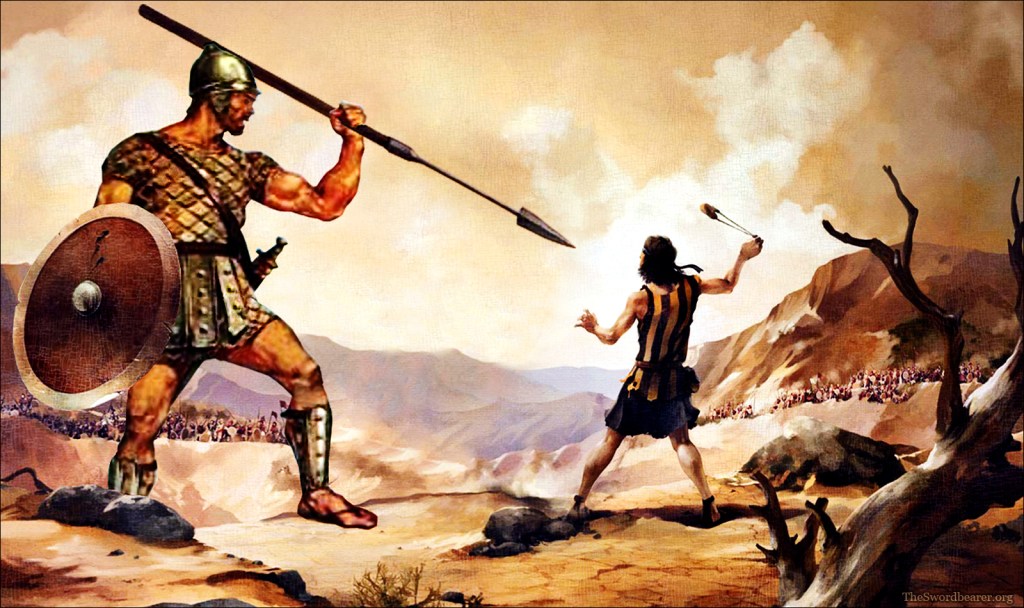
Micah was from Gath; yes, the same place as Goliath. David, as something other than a child, facing Goliath.Brown-Driver-Briggs' Hebrew Definitions, tells us: môrashtı̂y - Morasthite see Moreshethgath = “possession of Gath” 1) an inhabitant of Moresheth. E.W. Bullinger helps to establish the beginnings of Micah's prophetic voice.
“MICAH begins, apparently, a year or two before the end of Jotham’s reign, Isaiah, in that case, had already been prophesying some seventeen or eighteen years.”
By comparing Micah 4:10 with Isaiah 39:5,6, we have another case of similar words occurring in two different prophets. Note that we are told that Micah also functioned during the days of Hezekiah; it may be presumptuous to assume that Micah prophesied to or against Hezekiah as Isaiah did.
Then Isaiah said to Hezekiah, "Hear the word of the LORD of hosts, 'Behold, the days are coming when all that is in your house and all that your fathers have laid up in store to this day will be carried to Babylon; nothing will be left,' says the LORD. 'And some of your sons who will issue from you, whom you will beget, will be taken away, and they will become officials in the palace of the king of Babylon.'" Isaiah 39:5-7 NASB
Continuing with Bullinger's exposition/commentary -
"In this ease, the period covered by Micah and Isaiah was almost exactly the same (cp. Mic_1:1 with Isa_1:1; and see Appdx-77). It is no wonder that the circumstances did call for similar utterances, constituting a confirmation of the Word of Jehovah "by the mouth of two or three witnesses." Both were independent, without any idea of "copying" one from the other, as is alleged by the writer in The Encyclopedia Britannica, eleventh (Cambridge) edition, 1910, 1911, vol. xviii, p. 357, who says: "it is impossible that much, if any, of these chapters (Mic. 4-7) can be ascribed to Micah himself". This is said in the face of the fact that Jeremiah (Mic_26:16-19) definitely quotes and refers to Micah."
Since Bullinger points out how similar Isaiah is to Micah, I choose to give you Isaiah 1:1 here.
The vision of Isaiah, the son of Amoz concerning Judah and Jerusalem, which he saw during the reigns of Uzziah, Jotham, Ahaz and Hezekiah, kings of Judah. Isaiah 1:1 NASB
Some notable differences would be Isaiah's reference to King Uzziah, something Micah did not do. Both are speaking toward Judah and Jerusalem; however, Micah chooses to use the term Samaria, which was the capital of the Northern kingdom.
I want to add one more thing here –
I have come to understand the Jewish concept of prophecy, and it does not include the flash and pizzazz we have become accustomed to. Prophecy is repeated patterns to the Jew, and the idea of two or three witnesses is an essential part of the verification process.
The ISBE defines Uzzi'ah for us – His name means the (strength of Jehovah). King of Judah B.C. 809-8 to 757-6. In some passages, his name appears in the lengthened form Azariah: After the murder of Amaziah, his son Uzziah was chosen by the people, at the age of sixteen, to occupy the vacant throne; and for the greater part of his long reign of fifty-two years, he lived in the fear of God, and showed himself a wise, active and pious ruler. He never deserted the worship of the true God, and was much influenced by Zechariah, a prophet who is mentioned only in connection with him. 2Ch_26:5.
Under the reign of Uzziah,
''the southern kingdom was raised to a condition of prosperity which it had not known since the death of Solomon. The end of Uzziah was less prosperous than his beginning. Elated with his splendid career, he determined to burn incense on the altar of God but was opposed by the high priest Azariah and eighty others. See Exo_30:7-8; Num_16:40; Num_18:7. The king was enraged at their resistance, and, as he pressed forward with his censer, he was suddenly smitten with leprosy. This lawless attempt to burn incense was the only exception to the excellence of his administration. 2Ch_27:2. Uzziah was buried "with his fathers," yet apparently not actually in the royal sepulchres. 2Ch_26:23.”
A few other Prophets around this time frame. Isaiah 1:1 NASB The vision of Isaiah, the son of Amoz concerning Judah and Jerusalem, which he saw during the reigns of Uzziah, Jotham, Ahaz and Hezekiah, kings of Judah. Obadiah 1:1-2 NASB The vision of Obadiah. Thus says the Lord GOD concerning Edom--We have heard a report from the LORD, And an envoy has been sent among the nations saying, "Arise and let us go against her for battle"-- 2 "Behold, I will make you small among the nations; You are greatly despised. Nahum 1:1-3 NASB The oracle of Nineveh. The book of the vision of Nahum the Elkoshite. 2 A jealous and avenging God is the LORD; The LORD is avenging and wrathful. The LORD takes vengeance on His adversaries, And He reserves wrath for His enemies. 3 The LORD is slow to anger and great in power, And the LORD will by no means leave the guilty unpunished. In whirlwind and storm is His way, And clouds are the dust beneath His feet.
The Word from Micah is concerning Samaria and Jerusalem.
In considering Samaria, I am reminded of the hatred and racism that we see in the gospels, as the Jews would walk the longest way just so that they would not have to pass through Samaria. And then there was the interaction Jesus had with the Samaritan woman at the well. That well was within Samaria, and her comments pointed out some of the hatred and prejudice she lived with on a daily basis.
Names that are mentioned: Jotham, Ahaz, and Hezekiah, several of which were Kings of Judah.
The reason I emphasize the names is that they may give us some insight into why the Word came. Keep in mind; nothing is random or by accident; and, you cannot separate the Word given from the human emotions that are a part of the speaker, in this case, Micah. The idea here is to find the link and possibly the reasons behind the “Word” given by Micah.
Jotham
The ISBE tells us that Jotham was the - Twelfth king of Judah, son of Uzziah and Jerusha, daughter of Zadok (2Ki_15:32-38; 2Ch_27:1-9).
Jotham was 25 years of age at the time of his father's attack of leprosy and was at once called upon to take the administration of the kingdom (2Ki_15:5; 2Ch_26:21). In doing this, he not only judged the people of the land by presiding at the administration of justice but also was over the household of the king, showing how complete was the isolation of his father. He was thus king in all but name and is invariably spoken of as reigning in Jerusalem. His reign lasted for 16 years (2Ki_15:33; 2Ch_27:1), 759-744 (others put later). While the father loved husbandry and had much cattle (2Ch_26:10) - external affairs with which he could occupy himself in his retirement - to the son fell the sterner duties and heavier responsibilities of the state.
Ahaz
Again we turn to the ISBE.
“The name is the same as Jehoahaz; hence appears on Tiglath-pileser's Assyrian inscription of 732 bc as Ia-u-ha-zi. The sacred historians may have dropped the first part of the name in consequence of the character of the king.” Ahaz was the son of Jotham, king of Judah. He succeeded to the throne at the age of 20 years (according to another reading 25). The chronology of his reign is difficult, as his son Hezekiah is stated to have been 25 years of age when he began to reign 16 years after (2Ki_18:2). If the accession of Ahaz be placed as early as 743 bc, his grandfather Uzziah, long unable to perform the functions of his office on account of his leprosy (2Ch_26:21), must still have been alive. (Others date Ahaz later, when Uzziah, for whom Jotham had acted as regent, was already dead.)
“Although so young, Ahaz seems at once to have struck out an independent course wholly opposed to the religious traditions of his nation. His first steps in this direction were the causing to be made and circulated of molten images of the Baalim, and the revival in the valley of Hinnom, south of the city, of the abominations of the worship of Moloch (2Ch_28:2, 2Ch_28:3). He is declared to have made his own son “pass through the fire” (2Ki_16:3); the chronicler puts it even more strongly: he “burnt his children in the fire” (2Ch_28:3). Other acts of idolatry were to follow.” [These acts are spelled out in detail in 2Chronicles 28.]
Hezekiah
Hezeki'ah.(the might of Jehovah). The ISBE informs us that he was the twelfth king of Judah, son of the apostate, Ahaz and Abi or Abijah, ascended the throne at the age of 25, B.C. 726. Hezekiah was one of the three most perfect kings of Judah. 2Ki_18:5. Sir_49:4. His first act was to purge, repair and reopen, with splendid sacrifices and perfect ceremonial, the Temple. He also destroyed a brazen serpent, said to have been the one used by Moses, in the miraculous healing of the Israelites, Num_21:9, which had become an object of adoration.”
“He refused to acknowledge the supremacy of Assyria. 2Ki_18:7. The instant war was imminent Hezekiah used every available means to strengthen himself. 2Ki_20:20.”
“It was probably at this dangerous crisis in his kingdom, that we find him sick and sending for Isaiah, who prophesies death as the result. 2Ki_20:1. Hezekiah's prayer for longer life is heard. The prophet had hardly left the palace when he was ordered to return and promise the king immediate recovery and fifteen years more of life. 2Ki_20:4. An embassy coming from Babylon ostensibly to compliment Hezekiah on his convalescence, but really to form an alliance between the two powers, is favorably received by the king, who shows them the treasures which he had accumulated. For this, Isaiah foretells the punishment that shall befall his house. 2Ki_20:17.”
In my last post, I skirted past Ezekiel 39:18-20. I did that because they were more of a repetition of verse 17, and they were almost word for word what Revelation 19 conveys when it says that Jesus comes as the Warrior King (Messiah,) that Israel has longed for. The Messiah calls out, come to the feast, speaking to the meat-eating birds and beasts that they should gorge themselves on the flesh of kings, mighty men, and all others who chose to fight with God.
In this post, we will continue with Ezekiel 39:21.
Ezekiel 39:21 NASB "And I will set My glory among the nations, and all the nations will see My judgment which I have executed and My hand which I have laid on them.
And I will set My glory among the nations
Set is the Hebrew word nâthan and means to give, used with great latitude of application (put, make, etc.): - add, apply, appoint, ascribe, assign, X avenge, X be ([healed]), bestow, bring (forth, hither), cast, cause, charge, come, commit.
So when I associate appropriate word choices with the context certain words stand out; such as: apply, ascribe, bestow, cast, and, cause. Why would these words be important? Because the nations, in general, have not honored God's glory, recognized it, or cared that it even existed. Sadly, Israel similarly treated the Father.
And I will set My glory among the nations
Glory, in this case, is the Hebrew word kabod and means abundance, honor, glory. Other words available to us are riches and splendor.
While I honestly cannot exclude God from setting his riches among the nations, but they why would He do that? Fortunes have not turned anyone to Christ. Jesus said to the disciples; it is difficult for a rich man to enter the kingdom. The disciples were stunned by this statement and asked why. To this Jesus replied, it is easier for a camel to pass through the eye of a needle than for a rich man to enter. While Jesus statement opens the door to chance, it is obvious to see that riches are little more than a hindrance.
Now, to set one's honor, God's honor, among the nations would be to show them who He is – His nature and character. One aspect of His nature is that He does not lie.
And I will set My glory among the nations;
The phrase, among the nations, is only one Hebrew word gôy and means a foreign nation; hence a Gentile. To the Jews it meant heathens. Now, if God did set his honor and splendor among the nations, what might be the result? Having seen what God can, and does do, many will turn their hearts toward Him. We have evidence for this, and we find it in Revelation 7:9.
“a great multitude which no one could count, from every nation and all tribes and peoples and tongues, standing before the throne and before the Lamb, clothed in white robes, and palm branches were in their hands;”
Note where they are from – every nation, tribe, people, and tongues. Apparently, God's plan worked.
“and all the nations will see My judgment which I have executed and My hand which I have laid on them.”
Again, the emphasis is on the nations, as they see God's judgment, which He has laid on them. Who then, is them? It seems like a legitimate question, seeing as Gog, is the one having fire reigned down upon them. Ah, but if you were paying attention as we worked our way through chapter 38 and now 39, then you would have realized that Israel takes a tremendous and deadly beating in all this, especially if this fire is nuclear.
Another question we should be prompted to ask is, why is Israel being judged so harshly? This type of question is precisely one of the reasons that I want to teach Bible study. The direct and implied answer, found throughout the Bible, tells us that Israel rejected God. That is the short answer, but it will suffice for the moment.
Ezekiel 39:22 NASB "And the house of Israel will know that I am the LORD their God from that day onward.
So, not only do the nations learn that Jehovah is God, but Israel seems to acquire the full understanding that Jesus is the Lord God. Ask yourself a question, why does it take such extremes to get out attention?
Prompted by horrific events, we have been driven to ask some hard questions. Well, here comes the answers.
Ezekiel 39:23-24 NASB "The nations will know that the house of Israel went into exile for their iniquity because they acted treacherously against Me, and I hid My face from them; so I gave them into the hand of their adversaries, and all of them fell by the sword. 24) "According to their uncleanness and according to their transgressions I dealt with them, and I hid My face from them."'"
The nations will know that the house of Israel went into exile for their iniquity because:
They acted treacherously against Me, and I hid My face from them
What then happened to them as God hid His face?
To put it bluntly, this attack, led by Gog, will cause many in Israel to die. This statement will cause some grief, because the readers, like Israel, think they are safe and protected. In a previous post on Ezekiel 38, I mentioned Dr. David Reagan who said this battle with Gog could not happen anytime soon because Israel is anything but safe. Maybe, the safety is all in their heads.
I gave them into the hand of their adversaries.”
Psalm 83 speaks of ten nations gathered against Israel. Ezekiel 39:6 tells us that God will send fire against those living securely in the coastlands. You should be asking, which coastal nations is He talking about? Since we know that Libya and Ethiopia are two of them, what might be the common factor here? Islam. If Islam is the commonality then what other Mediterranean coastal nations could be affected? Spain, Algiers, Somalia, Egypt, Saudi Arabia, Iran, Iraq, France, Italy, and Greece. Are there others? How far do you wish to speculate? Most of these are committed Islamic nations, while others are being taken over. I suppose the point here is, that in many cases these nations are allied with Gog and his armies, in their fight against God.
All of them fell by the sword.
Apparently, not all fell by the sword, but many certainly did.
According to their uncleanness and according to their transgressions I dealt with them.
Ezekiel 39:24 is where we find this, but look at the same verse from another translation.
“Yes, I treated them as their uncleanness and crimes deserved; and I hid my face from them.” CJB
While the majority use the word uncleanness, the International Standard version conveys that, It was because of their defilement. I believe I can understand the depth of this perversion as I read through the Old Testament, but what do I know of the Modern day Israel? Very little. As far as perversion goes, Israel has their gay rights parades, just as America, or most any other nation. While that could be the problem, God always seemed to be focused on Israel's idolatry, and, in a sense, adultery – the pursuit of other lovers.
Consider that Balaam (the prophet for hire,) told Balak the son of Zippor, king of Moab that he could take Israel down by introducing women from the nations, as they would bring in their gods and Israel would fall prey. Well, they did.
I hid My face from them.
Hid is the Hebrew word sâthar meaning to hide (by covering), literally or figuratively: - be absent, keep close, conceal, hide (self).
Attempt to explain to me how the God that has engraved our faces on the palms of His hands can hide his face from His people? The answer lies in scripture itself.
Deuteronomy 31:16-18 NASB 16) The LORD said to Moses, "Behold, you are about to lie down with your fathers; and this people will arise and play the harlot with the strange gods of the land, into the midst of which they are going, and will forsake Me and break My covenant which I have made with them. 17) "Then My anger will be kindled against them in that day, and I will forsake them and hide My face from them, and they will be consumed, and many evils and troubles will come upon them; so that they will say in that day, 'Is it not because our God is not among us that these evils have come upon us?' 18) "But I will surely hide My face in that day because of all the evil which they will do, for they will turn to other gods.
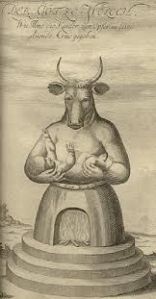
They had not been out of Egypt for very long when they pressured Aaron to make the idol Molech. Pressure may be too intense a word considering that Aaron may have actively gone along with the idea.
How do I know it was the idol Molech? In Acts 7 Stephen is brought before
the Jewish council; his life is on the line. With his life in jeopardy, what does Stephen say to these learned men? He gives them a history lesson, which none of them disputed. In that lesson, Stephen brings out something that seems to be avoided in our Bible reading.
Acts 7:43 CJB No, you carried the tent of Molekh and the star of your god Reifan, the idols you made so that you could worship them. Therefore, I will send you into exile beyond Bavel' (Babylon.)
Do your homework and find out how people worshiped before Molekh; it will disgust you.
As for my own life, I spent a good deal of time running from God. Religion teaches that it is your sin that keeps God from you. However, I can tell you, that no matter how dark it got, I always knew God was right there. I, on the other hand, was too embarrassed by my actions to think he would speak or listen to me.
Why would He have been any different with Israel? All they had to do was turn to Him with their whole heart, just as we should.
Many years ago, my life took a nasty turn, and I lost everything precious to me. It has taken years to recover from that chain of events, and yet, I have never fully recovered. You might think that something like this would be considered total devastation. In spite of my decisions, I have found many silver linings within this dark cloud, and one of those was a God I never honestly knew.
As part of my recovery, I took a job at a large hardware store, where I was fortunate enough to get the opening shift with some frequency. Those early hours worked out well for me, as I would stop at McDonald's for coffee and breakfast. While there, I began to read my Bible and write about what I found in it. I had already done my fair share of mouthing off to God previously, and He did not strike me dead, so I knew He could handle my thoughts and questions now. This one-person Bible study went on for the seven years that I worked for the hardware store and has continued to this day, some four years later.
One way to look at this is, I have spent the last 20 years of my life intentionally investing in God's word.
Before this time with God, and after spending a majority of my life in the church, I knew little more than what others told me, and most of it was either not true or such gross distortions that I could not believe what I had heard. By spending that time reading, I found a God that I did not know, and I found Him to be full of mercy and grace. You see, an aspect of what I challenged God with was that He make Himself real to me, and to do it from His word. Well, he did just that, and now, I cannot separate His nature and character from the mercy and grace that I found in Him. Once I learned these things, they became a focus of my conversations, as I tried to convince others, principally believers, that God was the opposite of what most think of Him.
As you can imagine, I have made my understanding and beliefs known to many, so I am often the target of their challenges, rebuttals, and criticisms. I was not surprised when I got verbally attacked with a comment/question, which went something like this: “I think more people need to feel the wrath of the angry God. You know He is coming back with a vengeance, and those who think they can fall back on a message of mercy and grace are merely asking for hell's fire.”
Is that what I have been doing, merely asking for hell's fire?
How absurd can you be?
I can tell you that I decided long ago that if I was going to make a mistake in describing God, I was going to err on the side of mercy. Since we should have the understanding, especially if we are the type that looks for God to come down on us, that “we will be judged in the same manner in which we judge.” Then we should be the fearful ones because we might just get exactly what we called down on others. Matthew chapter 7 states this quite clearly.
Matthew 7:1-2 NASB "Do not judge so that you will not be judged. 2 "For in the way you judge, you will be judged; and by your standard of measure, it will be measured to you.
Another version of the same theme comes from Luke's gospel.
Luke 6:36-38 NASB "Be merciful, just as your Father is merciful. 37 "Do not judge, and you will not be judged; and do not condemn, and you will not be condemned; pardon, and you will be pardoned. 38 "Give, and it will be given to you. They will pour into your lap a good measure--pressed down, shaken together, and running over. For by your standard of measure it will be measured to you in return."
I included Luke 6:38 because it is frequently used in the faith movement.
Pay attention to the context, which has everything to do with a merciful God and not condemning people, no matter who they are, NOT money. The last phrase of the paragraph says, “For by your standard of measure it will be measured to you in return.” He is talking about our judgmental attitudes, comments, and actions.
Since my last post discussed the false teachings surrounding the Great White Throne and how I believe God scrutinizes the books mentioned in Revelation 20, because He is seeking a reason to show mercy to those before Him. Sadly, that is in opposition to what most people see when they read about the Great White Throne, and here is why: 1. Because it is “the” throne, then, of course, God has to be sitting on it. Well, they are half right, but only because Jesus is God. The entire book of Revelation is about Jesus, and no one else holds the focus. Therefore, it is Jesus on that great throne. 2. Because He calls all dead people to Himself, there is the presumption that these people have no hope, and that is not true. 3. And, in Revelation 20, unlike Matthew 25, we only see the outcomes of those He did not find in ALL those books, and in Revelation 20, their outcome is hell. However, there is a fourth reason people are in opposition to a merciful God; these religious zealots cannot handle a God who gives people entrance into the kingdom without having to resist the temptations and do the hard work of trying to win the lost, which these unmerciful ones have.
The sheep we see in Matthew 25, at their last opportunity, are given entrance into the kingdom (Matthew 20:1-16). That hope of entrance into the kingdom is our only true anchor and a form of payment. And yet, the sheep gained that same entrance without the years or time spent. And, though they won't admit it, the religious mind is jealous and envious, thinking, I could have spent years in frivolity and still acquired God's mercy and entrance into the kingdom. Or, perhaps not, because this life we live is about faith, isn't it, and where is yours?
A friend of mine, whom I respect very much, wrote me back and said, they were judged for their deeds, which focused on their not receiving Jesus. I admonished the readers, at the end of my Great White Throne treatise, to submit to the truth, which is the Word of God, and adjust their beliefs to line up with what that Word says. Note the argument at the end of this parable.
Matthew 20:12-15 MSG 'These last workers put in only one easy hour, and you just made them equal to us, who slaved all day under a scorching sun.' 13 "He replied to the one speaking for the rest, 'Friend, I haven't been unfair. We agreed on the wage of a dollar, didn't we? 14 So take it and go. I decided to give to the one who came last the same as you. 15 CJB Haven't I the right to do what I want with what belongs to me? Or do you begrudge my generosity?'
Ultimately, the decision is God's and not ours.
So what does Revelation 20 tell about the deeds of those sent off to hell's flames?
Revelation 20:12 NASB And I saw the dead, the great and the small, standing before the throne, and books were opened; and another book was opened, which is the book of life; and the dead were judged from the things which were written in the books, according to their deeds.
They were judged according to their acts, with NO definition of what those deeds were. There is nothing in this passage or any passage near it that tells us what got them excluded. We should all know by now that people will be judged based on what they did with Jesus Christ, not their sins. (You either accept Him, or you reject Him. It's that simple.) Since sin and deeds, even if they are remotely naughty, seem to be our constant religious focus and can condemn us to hell, as religion wants you to believe, then what was the purpose of the cross?
While there may be a passage that defines this more clearly, Paul's letter to the church at Colossae spells out rather well the effects of the cross.
Colossians 2:13-14 NASB 13 When you were dead in your transgressions and the uncircumcision of your flesh, He made you alive together with Him, having forgiven us all our transgressions, 14 having canceled out the certificate of debt consisting of decrees against us, which was hostile to us; and He has taken it out of the way, having nailed it to the cross.
All I can think about is the fact that, in Christ, the sins, transgressions, and decrees against me are gone.
The fascinating thing about this letter is that the Apostle Paul walked this earth at the same time as Christ. Unaware that he walked about drowning in sins and transgressions, because Saul, the Pharisee, was the finest of Jews. The thought that a Jew was unrighteous would have been entirely foreign to him, and because they were Jews, righteousness and entrance into the kingdom were practically a given. That day, when God knocked, Saul the Pharisee to the ground, while on the road to Damascus, Saul had the intent of harming those who followed the WAY; he learned that he had no righteousness and that Jesus was the one being hurt when he touched one of these followers... This sentiment gives a whole new spin to the concept of being dead in your transgressions, for Saul, before his conversion, was just that, a walking dead man.
So Jesus Christ died while Saul, the Pharisee's apprentice, walked the earth. Because Jesus Christ did that, ALL sins, past, present, and future, were forgiven, and humankind was forgiven. Saul, the Pharisee, was forgiven. Did Christ on the cross change Saul's life? NO, and if it did, he did not know it, nor did he receive the peace that is gained when you accept that sacrifice.
So who is this God we supposedly serve?
I can comprehend that He is the God who forgave, but is there more?
Without directly thinking about the question, Who is this God I serve, I already stated a few paragraphs ago, one of the most significant aspects of who He is.
Luke 6:36 NASB "Be merciful, just as your Father is merciful.
The presumption on my part would be that you had read this verse at some point in your life. If that is the case, then what did you do with that directive? Ah, but you say, we are not under the law and therefore cannot, and will not receive a “command,” even if it tells me to be merciful! But we do have a strong warning from the book of James; why you might also say, it's the law.
James 2:12 CEV Speak and act like people who will be judged by the law that sets us free.
Does it say you will be judged and therefore get excluded, even after Jesus said that no one will ever strip you out of His hands? No, it tells us to ACT as though we will.
If the Laws that brought death and condemnation are to be our guide for how we act, then we would be a sorry lot indeed. Our looks would probably be no different than they are now, as many of the teachings we sit under continually push us back under those laws of bondage. But note how the verse says, “by the law that sets us free.” This law of liberty is the very thing that Paul wrote about in most of his letters. And, he said, I can never go back to the bondage those Jewish laws put on me.
Galatians 2:16 CJB even so, we have come to realize that a person is not declared righteous by God on the ground of his legalistic observance of Torah commands, but through the Messiah Yeshua's trusting faithfulness. Therefore, we too have put our trust in Messiah Yeshua and become faithful to him, in order that we might be declared righteous on the ground of the Messiah's trusting faithfulness and not on the ground of our legalistic observance of Torah commands. For on the ground of legalistic observance of Torah commands, no one will be declared righteous.
No one is asking you to put yourself in bondage; however, God is asking you to submit to the grace and mercy that set you free and become faithful to Him. So, in acting like one who will be judged by grace and mercy, the law of liberty, you then speak and demonstrate this grace, mercy, and freedom consistently, to those who need it; that happens to be everyone.
He is our peace.
Romans 5:1 NASB Therefore, having been justified by faith, we have peace with God through our Lord Jesus Christ,
Ephesians 2:13-15 NASB But now in Christ Jesus you who formerly were far off have been brought near by the blood of Christ. 14 For He Himself is our peace, who made both groups into one and broke down the barrier of the dividing wall, 15 by abolishing in His flesh the enmity, which is the Law of commandments contained in ordinances, so that in Himself He might make the two into one new man, thus establishing peace,
He shows mercy to all.
Romans 11:32 NASB For God has shut up all in disobedience so that He may show mercy to all.
Paul, writing to Timothy, tells this young man why Saul, the Pharisee, obtained mercy, as an illustration of God's patience.
1 Timothy 1:15-16 Moffatt NT 15 It is a sure word, it deserves all praise, that "Christ Jesus came into the world to save sinners"; and though I am the foremost of sinners, 16 I obtained mercy, for the purpose of furnishing Christ Jesus with the chief illustration of his utter patience; I was to be the typical instance of all who were to believe in him and gain eternal life.
He is the God of grace. Stop for a moment and remind yourself what grace is. It is God's riches, at Christ's expense. And, in John's gospel, this is stated as an observation.
John 1:16 ESV For from his fullness we have all received, grace upon grace.
John 1:16 portrays the Father heaping his grace upon us. While Dr. Luke wrote that we are saved because of the grace of the Lord Jesus.
Acts 15:11 ESV But we believe that we will be saved through the grace of the Lord Jesus, just as they will.”
The general impression you should have is that the Father and the Son are exuding grace and mercy toward us, and in us.
How, then, do we come up with the crazy idea that God is looking to destroy people?
John 10:27, 28 speaks of those who are His sheep.
This life in Christ is not an exclusive club; He desires for everyone to jump in. For those who do, there is the guarantee of His word, which tells us that we will never perish in hell, nor will anyone ever take us out of the Son's hand.
John 10:27-28 ESV My sheep hear my voice, and I know them, and they follow me. 28 I give them eternal life, and they will never perish, and no one will snatch them out of my hand.
This answer seems so simple, and yet some are capable of entertaining the idea that God does not love some people.
John 3:16 ESV “For God so loved the world, that he gave his only Son, that whoever believes in him should not perish but have eternal life.
How can you feel comfortable decreeing the eternal punishment of so many, when God loved the world enough to allow His own Son to be murdered on a cross?
All one has to do to receive this life is believe in Him who made this life possible; his name is Jesus.
The entire reason that we are still here on this earth is that God, in His patience, is waiting for that last one to come into the kingdom.
2 Peter 3:9 ESV The Lord is not slow to fulfill his promise as some count slowness, but is patient toward you, not wishing that any should perish, but that all should reach repentance.
If you think God is so ominous, then how do you explain the Shepherd, showing mercy to those who apparently did not go through the proper religious ceremonies, missed the rapture of the church, and fell asleep in death, not knowing where they stood with the Father?
You see all this portrayed in Matthew 25:31-46. I will let you look it up at your leisure.
Suffice it to say that given mercy, these sheep that gained entrance to the kingdom have an immediate understanding that they had missed the mark, and yet, Jesus, the one sitting upon the throne, is showing them mercy.
The response given by the great shepherd shocked me to my core, as it challenges a multitude of things I have been taught to the contrary.
It is because of the simple acts of kindness demonstrated by the people represented as sheep, such as: giving ME a drink when I was thirsty; coming to visit ME when I was in prison; clothing ME when I was naked, and feeding ME when I was hungry.
A part of that challenge to my treatise on the Great White Throne indicated that those before the throne received no mercy because they had rejected Jesus.
Scripturally, do we see any evidence of God directly rejecting any for rejecting Jesus?
No, but what do we see in Matthew 25 are people who fed, visited, and clothed JESUS, without even knowing it.
What they did was to act as though they had the nature and character of the Father in them.
The logic of such a moment gets lost, because how do you have the Son's life in you, making you theoretically a “Christian,” and not get caught up in the snatching away of the Church?
I suppose the answer to that comes from the parable of the ten virgins.
This story is an inference to the modern-day church; the people who will experience Christ's return for those who are His.
The parable demonstrates a problem.
Ten virgins (so far it sounds good as all are pure) get the same invitation (we too have received that same message, and it seems very similar to what the future disciples heard – deny yourself, take up your cross, and follow me.)
They all grab their lamps as though they all seem to understand that this will be a long wait (However, five of them have to good sense to bring extra oil for themselves – this is not a coordinated effort from what we can read, and that aspect makes the story even more enticing.)
All of them fall asleep (this fact brings them no condemnation.) Awakened by the voice of the bridegroom, calling them to come, five refill their lamps, trim their wicks, and light the oil lamps. Sadly, the others discover they are out of oil. What do they do? They clamor and demand that the others give of theirs (there is something preposterous about this component of the story, not because they ran out of oil, but because of their attitude).
Those without oil are sent by the others to go off and buy more. (I joke as if they had a convenience store where they can get a late-night cup of coffee and some lamp oil. But this is Jerusalem, and ordinary people are asleep with their families nearby.)
In the process of trying to buy more lamp oil, the bridegroom comes, opens the doors, lets those who have come because they were prepared and waiting for the bridegroom to call them, and they enter. The door was then shut.
What is the problem here?
If this is speaking of the Church, then we are talking about a fifty percent ratio of people who got the invitation and did not prepare themselves, and were, therefore, not ready when the bridegroom called.
Now, if these are representations of the church, do they have the nature and character of the Father in them?
Were they awaiting His return?
In the story of the ten virgins, they all got the invite. But what did they do with that information, especially since they had a pretty good time frame of when he would come?
Besides that, they know where this guy lives and where he is building the home for his bride. All you have to do is casually walk down that street, and you will know that the time is almost here.
That information might prompt you to buy more oil just in case, wouldn't it?
Fifty percent of the church is like this.
One brother I know, a very genuine man, recently ranted to me that we have been waiting for over two thousand years, sowhy are you getting worked up now?
I see that as a man with no excess oil.
If you remember, there is a very dark detail from the story of Noah, in which God's description of humanity demonstrates what happens to a world with free choice without the influence of a reborn spirit to restrain us.
People chose to live outside of God's control, and their decisions impacted the whole earth, for it was filled with violence, and every thought was only evil.
Acting like civilized people is not what we do, unless something inside of us is changed.
There is just one thing that brings about that change,
and it is our acceptance of Jesus Christ in a restored relationship with the Father.
Is it possible that you might not have understood that this internal change had come over you?