What you will find here are thoughts and commentary on what I happen to be studying. As for me, I have two daughters who have grown up without me. Education wise, I have two AS degrees, one being in Horticulture, but no bachelors degree. The longest time spent at any one job was 15 years. Sadly, I have not been the great success I had dreamed I would be, but I find that I am becoming more content as my relationship with the Father God grows. God's word is my passion.
May I be honest? There are some portions of the Bible that I find tedious, like the book of Numbers and these next few verses. Let's see if I can invest a bit of life into them.
Micah 1:6 MKJV And I will make Samaria into ruins of the field, planting places for a vineyard; and I will pour down her stones into the valley, and I will uncover her foundations.
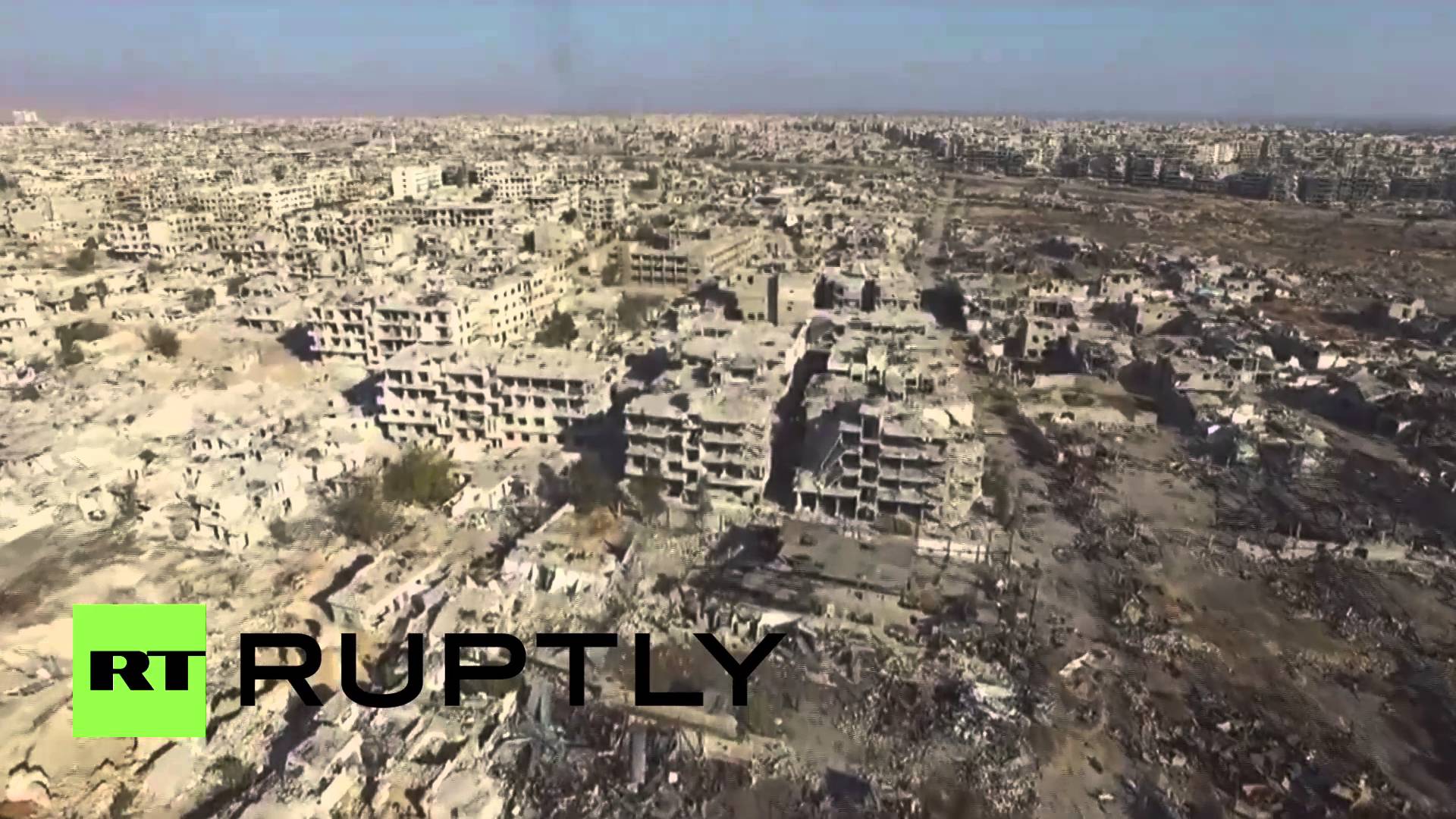
This verse reminds me of another scenario in scripture, where it spells out the destruction of Damascus. Isaiah 17:1 tells us that Damascus will cease to be a city.
Look at this picture of Damascus; If it is not yet uninhabitable, it will be soon.
A Drone picture of Damascus that shows the destruction going on there; “no copyright infringement is intended.”
From ESV maps showing the range of the Assyrian empire. Note where Samariah is located, directly above Judah.
Although I went into great detail about why there was such a hatred of Samaritans, I can't just walk away from the region because the Holy Spirit seems to keep drawing that area into the equation.
Note: Samaria was taken by Shalmaneser (2Ki_17:6) B.C. 724; razed to the ground by Hyrcanus (Josephus, Ant. l. xiii. c. 18); restored by Herod, and called Sebastê; and is now a small village called Sebusta, its ancient site being converted into gardens.
So, we have learned that Samaria was taken all the way to the ground, and will, like Damascus, be destroyed again. One of the main problems I see with that area is that it sits in the Megiddo valley and Ezekiel 38,39 decree that the Megiddo valley will be filled with blood soon.
Micah 1:7 MKJV And all her graven images shall be beaten to pieces, and all her gifts shall be burned with the fire, and I will destroy all its idols. For she gathered it from the reward of a harlot, and they shall return to the reward of a harlot.
Let's consider two aspects of this verse for a moment.
“And all her graven images shall be beaten to pieces, and all her gifts shall be burned with the fire.”
“and I will destroy all its idols. For she gathered it from the reward of a harlot, and they shall return to the reward of a harlot.”
“And all the graven images thereof shall be beaten to pieces, ...By the Assyrian army, for the sake of the gold and silver of which they were, made, or with which they were adorned, as was usually done by conquerors to the gods of the nations they conquered; these were the calf of Samaria, and other idols; and not only those in the city of Samaria, but in all the other cities of Israel which fell into the hands of the Assyrian monarch;” see Isa_10:11; [John Gill's Exposition of the Bible]
Micah 1:8 MKJV Therefore I will wail and howl; I will go stripped and naked; I will make a wailing like jackals, mourn like the daughters of an ostrich.
[I will wail and howl] The prophet took up wailing because of the invader and the destruction of Judah and Jerusalem (Mic_1:8-16). [Dake]
Dake's commentary wants us to believe that this is Micah, speaking about his actions and reactions. I have to remind myself that Micah is speaking under the influence of the Holy Spirit (even if he didn't know he was doing that,) on behalf of God. Micah is speaking God's heart. Why would God strip himself naked and wail like a jackal? That idea doesn't even seem reasonable. The bottom line here; I am not sure to whom I should assign these words. If it is Micah, he is indeed trying to make a point.
Micah 1:9 MKJV For her wounds are not curable; for it has come to Judah; it has reached to the gate of My people, to Jerusalem.
Interesting how the problem initiated with Samaria, in Israel, the Northern divided kingdom. Imagine that, God's people divided against themselves. Does that happen today? Oh sure, it happens all the time and churches will split over divisions.
When we consider a wound, does it typically heal? Certainly. Now some things take longer than others, and, in war, a leg blown off does not grow back. Some spiders, on the other hand, leave you with necrosis, which, in some cases, will not heal.
[wound is incurable] This expresses the fact that nothing could prevent her utter ruin, inasmuch as the nation had utterly filled up her measure of iniquity. [Dake]
Micah 1:10 MKJV Do not declare it in Gath; weep not at all; in the house of Leaphrah roll in the dust.
"Do not declare it in Gath" is interesting, as Gath is where Micah hails from, and eventually, so does Goliath.
John Gill's commentary points out that this phrase is borrowed from 2 Samuel.
2 Samuel 1:20 MKJV Tell it not in Gath, do not let it be known in the streets of Askelon, lest the daughters of the Philistines rejoice, lest the daughters of the uncircumcised triumph.
One commentator stated, “why would you tell the enemy about the crushing punishment that was to be dealt out to their enemies; they would only laugh.” Micah 1:11-12 MKJV Pass over to them, O dweller of Shaphir, in nakedness of shame. The dweller of Zaanan has not gone out; the mourning of Beth-ezel shall take from you his standing. 12) For be grieved for good, the dweller of Maroth, for evil came down from Jehovah to the gate of Jerusalem.
Joseph Benton's commentary communicates this: "Pass ye away, thou inhabitant of Saphir —Houbigant says that Eusebius places this city, the name of which signifies fair, or elegant, in the tribe of Judah, between Eleutheropolis and Askelon. Some think, however, that Saphir is not a proper name, and that there was no place so called in Judea; but that the clause ought to be rendered, Pass away, thou inhabitant of a delightful place, that is, Samaria, which was very pleasantly situated. The prophet here threatens the inhabitants of that place that they should go into captivity, in a way very unsuitable to their former softness and luxury, even stripped by the conquering enemy, and without so much as a covering to hide their nakedness. The inhabitant of Zaanan — A place in the tribe of Judah, called Zenan, Jos_15:37; came not forth in the mourning of Beth-ezel — “There was no burial of her dead with solemn mourning out of the precincts of her city, but she was besieged and put to the sword.” — Newcome. Or, the meaning may be, the inhabitants of Zaanan were so much concerned to provide for their own safety, that they took no notice of the mournful condition of their near neighbour Beth-ezel, which seems to have been a place near Jerusalem, termed Azal, Zec_14:5. Grotius, however, supposes Zaananto denote Zion, and Beth-ezelto signify Beth-el, called here by another name, importing the house of separation, because it was the principal seat of idolatrous worship. He shall receive of you his standing — The standing, or encamping of an army against the city; that is, the enemy shall encamp among you, shall stand on your ground, so that you will have no opportunity of coming out to the help of your neighbors. For the inhabitant of Maroth —A town in Judea, (the same probably that is called Maarath,Jos_15:59,)waited, &c.— Or rather, as the words may be translated, Although the inhabitant of Maroth waited for good, yet evil came, &c.,unto the gate of Jerusalem — Such a calamity as stopped not at Maroth, but reached even to Jerusalem. By Maroth, which signifies bitterness, or trouble, Grotius understands Ramah, or, expressed as it often is in the plural, Ramoth, a place in the tribe of Benjamin, near Beth-lehem, and not far from Jerusalem.
Micah 1:13-15 MKJV O inhabitant of Lachish, bind the chariot to the stallion; she is the beginning of sin to the daughter of Zion, for the sins of Israel were found in you. 14) Therefore you shall give parting gifts to Moresheth-gath; the houses of Achzib are for a lying thing to the kings of Israel. 15) Yet I will bring an heir to you, O dweller of Mareshah. The glory of Israel shall come to Adullam.
The following is from JosephBenson's Commentary on the Old and New Testaments O thou inhabitant of Lachish — This was a strong fortress in the tribe of Judah: see Jos_15:39. Bind the chariot to the swift beast — In order to flee from the approaching enemy. Lachish was one of the first cities that Sennacherib besiegedwhen he invaded Judea.She is the beginning of the sin to the daughter of Zion —She was the first among the cities of Judah which practised those idolatries which the kings and people of Israel had begun. Therefore shalt thou give presents to Moresheth-gath — Or, to Moresheth of Gath; that is, to the Philistines of that country, either to defend thee against the enemy or to receive thee under their protection. The houses of Achzib shall be a lie to the kings of Israel — The word Achzib signifies a lie. There was a town of that name in the tribe of Judah, mentioned Jos_15:44. This place, the prophet here foretells, will answer its name, and disappoint the kings of Israel that depended upon its strength and assistance: see 2Ch_21:3; and 2Ch_28:19. Israel is sometimes used for Judah, and so it may probably be taken here. Yet will I bring an heir unto thee, O inhabitant of Mareshah — This was another town belonging to Judah, mentioned Jos_15:44. The name signifies an inheritance; so here, by way of allusion, it is said, that a new heir or master should come and take possession of it, namely, a conquering enemy. He shall come unto Adullam the glory of Israel — Or, The glory of Israel shall come to Adullam; the Assyrians, whom Israel once gloried in as their ally, shall come to Adullam. This was a town in Judah not far from Lachish: see Jos_15:35. Some think the meaning of this clause is, that the chief men of Israel should be forced to hide themselves from their enemies in the cave of Adullam, as David did when he fled from Saul, 1 Samuel 23.
Micah 1:16 MKJV Make yourself bald, and cut off your hair for the sons of your delight; make your baldness large like the eagle; for they go into exile from you.
"By these phrases the prophet signifies, that the calamity would be so great as to deserve the strongest expressions of grief." [Make thee bald] Making the head bald in mourning was forbidden under the law (Deu_14:1), but since Judah had become like the heathen, she might as well mourn like them. Dake's commentary
Cutting the hair, or shaving it close, were expressions of mourning and lamentation anciently used among most nations. Enlarge thy baldness as the eagle — When she molts her feathers; for they are gone into captivity, &c. — By these phrases the prophet signifies, that the calamity would be so great as to deserve the strongest expressions of grief.Joseph Benson
Micah 1:5 NASB All this is for the rebellion of Jacob And for the sins of the house of Israel. What is the rebellion of Jacob? Is it not Samaria? What is the high place of Judah? Is it not Jerusalem?
The verse states, “All this is for the rebellion of Jacob and for the sins of the house of Israel.” As you can see the verse ends with a period, and then, inserts a question. Perhaps they should have ended with a comma and then said, “but,” what is the rebellion of Jacob, because I, nor you, know. I can now conclusively tell you how Samaria came to hold such disdain in the eyes of the Jews, but I cannot tell you what this rebellion was with any specificity. So let's find out.
"What is the transgression of Jacob?"
The transgression of Jacob. (According to the UCRT cross reference all these references apply to Jacob's transgression.) 2Ki_17:7-23, *2Ch_36:14-16, Isa_50:1-2; Isa_59:1-15, Jer_2:17; Jer_2:19; Jer_4:18; Jer_5:25; Jer_6:19, Lam_5:16, 1Th_2:15-16.
Without diving into scripture, there is the incident that all of us who have been around organized church for a long time are aware of; the short version of it goes like this. Issac is old, cannot see, and is dying., At his mother's prodding Jacob deceives his brother Esau, and then his father. Because of this deception, Issac gives Jacob (the second born) the blessing that was due the first - sheep, land, and the promise of God's best upon his life. Esau of course now wants to kill his brother Jacob, and so Jacob flees for life, at his mother's direction, to the land where her brother Laban resides, and thus begins our tale.
Now this deception aspect alone might be the answer to what the transgression of Jacob might be, but strangely, you still the blessing of God (what a coincidence that Issac gave him that blessing,) upon his life – along with constant problems. So, I am uncomfortable pinning the transgression/rebellion to this incident alone.
When searching for a reference that explains the transgression of Jacob, this passage in Genesis 31:1-3 is one of the places you are taken.
Genesis 31:1-3 NASB Now Jacob heard the words of Laban's sons, saying, "Jacob has taken away all that was our father's, and from what belonged to our father he has made all this wealth." 2) Jacob saw the attitude of Laban, and behold, it was not friendly toward him as formerly. 3) Then the LORD said to Jacob, "Return to the land of your fathers and to your relatives, and I will be with you."
Note how Jacob heard Laban's son say, Jacob has taken away all that was our father's. They were, of course, referring to the goats that had distinct markings, an agreement that Laban made with Jacob, and broke several times by stealing the goats away from Jacob.
Genesis 30:31-35 NASB So he said, "What shall I give you?" And Jacob said, "You shall not give me anything. If you will do this one thing for me, I will again pasture and keep your flock: 32) let me pass through your entire flock today, removing from there every speckled and spotted sheep and every black one among the lambs and the spotted and speckled among the goats; and such shall be my wages. 33) "So my honesty will answer for me later, when you come concerning my wages. Every one that is not speckled and spotted among the goats and black among the lambs, if found with me, will be considered stolen." 34) Laban said, "Good, let it be according to your word." 35) So he removed on that day the striped and spotted male goats and all the speckled and spotted female goats, every one with white in it, and all the black ones among the sheep, and gave them into the care of his sons.
Laban agreed and then had his sons take those same sheep out of the herd so he would not have to pay Jacob. At this point, I would say that all the transgression is on the part of Laban.
The sons of Laban may have also been referring to their sisters when they said “Jacob has taken away all that was our father's,” but that too was an agreement that their father had made and did not uphold. Still, Jacob had done nothing wrong to Laban.
As I go through references to Jacob, the first thing I find is the deception performed by Jacob and his mother, against Esau and Issac. But as I follow that trail, it seems that God had his hand in it all along, and blessed Jacob regardless.
There is, however, a drastic change when they meet Shechem the son of Hamor the Hivite:
Genesis 34:2 MKJV And when Shechem, the son of Hamor the Hivite, prince of the country, saw her, he took her and lay with her, and humbled her.
Almost all of Genesis 34 is centered upon Dinah, this young man Shechem and his actions, and the primary focus, the deception and deadly violence committed by Jacob's sons.
Who or what's to say men are good; but didn't this young man and his father seem to want to do the right thing. What you can't ignore is that Shechem raped Dinah; at best he seduced her, but when you consider the Jewish idea that a young girl is marriageable at 12 years and a day, how could you expect her to have the skills to resist some smooth talking man?. Besides all that, Shechem, we learn loved Dinah and wanted to marry her; while that seems excellent look at the IVP commentary below. Still, it seems men died without cause at the hands of Jacob's sons, while Jacob did and said nothing. Perhaps now we have what might be the transgression of Jacob.
The IVP Bible Background Commentary has this to say about rape.
Ravishing women. Rape as a means of obtaining a marriage contract was apparently one stratagem used in the ancient Near East. Laws regulating this practice are found in Exo_22:16-17, Deu_22:28-29, the Middle Assyrian Laws and the Hittite laws. These often require the rapist to pay an extraordinarily high bride price and sometimes forbid any possibility of divorce. Sumerian Law 7, like Genesis 34, deals with a case where a young, unbetrothed woman leaves her parents’ home without permission and is raped. The result is an option by the parents to marry her to the rapist without her consent.
On a side note: this phrase, “and he did and said nothing,” should have a familiar tone, for this was the way King David ran his own family.
Genesis 34:11-13 MKJV And Shechem said to her father and to her brothers, Let me find grace in your eyes, and whatever you shall say to me I will give. 12) Heap upon me ever so much price and dowry, and I will give according as you shall say to me. But give me the girl for a wife. 13) And the sons of Jacob answered Shechem and Hamor, his father, speaking with deceit because he had defiled Dinah their sister.
Again, the conversation starts with Jacob but quickly turns to the sons, who are doing all the speaking on behalf of the family. Everything the son's say is deceitful, with the purpose of making them pay for what Shechem did to Dinah.
Genesis 34:14-17 MKJV And they said to them, We cannot do this thing, to give our sister to one that is uncircumcised. For it is a reproach to us. 15) But in this we will agree with you, if you will be as we are, that every male of you be circumcised, 16) then we will give our daughters to you, and we will take your daughters to us, and we will live with you, and we will become one people. 17) But if you will not listen to us, to be circumcised, then we will take our daughter, and we will go.
Jacob is sitting right there, listening to every word, and yet he says and does nothing. Maybe he thinks this is all reasonable, and perhaps it is.
Genesis 34:18-24 MKJV And their words pleased Hamor and Shechem, Hamor's son. 19) And the young man did not hesitate to do the thing, because he had delight in Jacob's daughter. And he was more honorable than all the house of his father. 20) And Hamor and Shechem his son came to the gate of their city, and talked with the men of their city, saying, 21) These men are at peace with us. Therefore let them live in the land, and trade in it. For behold, the land is large enough for them. Let us take their daughters to us for wives, and let us give them our daughters. 22) Only on this condition will the men agree to us, to live with us, to be one people, if every male among us is circumcised as they are circumcised. 23) Shall not their cattle and their substance and every animal of theirs be ours? Only let us agree with them, and they will live with us. 24) And all that went out of the gate of his city listened to Hamor and to Shechem his son. And every male was circumcised, all that went out of the gate of his city.
The assumption, on the part of the Hivites, was that these people and their “wealth” would be joined to their community, making it stronger. The sons of Jacob had no intention of doing that and therefore waited until the third day after this barbaric surgery so that they could kill them all.
Genesis 34:27-29 MKJV The sons of Jacob came upon the slain, and plundered the city because they had defiled their sister. 28) They took their sheep and their oxen, and their asses, and that which was in the city and that which was in the field. 29) And all their wealth, and all their little ones, and their wives, they took captive and plundered even all that was in the house.
What was it that Laban's sons accused Jacob of taking, all that belonged to their father; and now Jacob's sons have done just that to the Hivites. Jacob, who has said nothing, now has something to say.
Genesis 34:30 MKJV And Jacob said to Simeon and Levi, You have troubled me, to make me stink among those who live in the land, among the Canaanites and the Perizzites. And I, being few in number, they shall gather themselves together against me, and kill me. And I shall be destroyed, my house and I.
Now the story goes on, but is it possible that this incident is one of the primary roots of Jacob's transgression?
2 Kings 17:7 MKJV And it happened because the sons of Israel had sinned against Jehovah their God, who had brought them up out of the land of Egypt, from under the hand of Pharaoh king of Egypt, and had feared other gods,
Note what 2Kings 17:7 says, “ And it happened because the sons of Israel had sinned against Jehovah their God.” While the reference has little to do with Shechem and the Hivites, these are the tribal names that evolved from the same sons that we just witnessed, deceiving the Hivites, slaughtering all the males, taking all the females captive, and looting all that they possessed. Is it possible, that as representatives of God on this earth, that they just misrepresented God? Why can I ask that question, because I have learned that God is, above all else, filled with mercy and justice?
If you know the story of Jonah, then you know that narrative ends with Jonah having a pity party because God showed the Ninevehites mercy and temporarily spared them. I can think of one other misrepresentation, and that was performed by Moses when he, against God's direction, struck the rock instead of speaking to it. Oh sure, water flowed, but what I see is Moses misrepresenting God. The people, most likely see God as an angry, vengeful God instead of one who operates out of mercy.
What is a predominant belief that most of us have?
That God is a vindictive God with one purpose, send as many people to hell as possible. I have come to understand this twisted theme from the mouths of church elders who lead studies at the churches I have attended over the years.
There is one last predominant thing that stands out against Jacob, although it is preceded by God's blessing once again as God changes Jacob's name to Israel.
Genesis 35:6-16 MKJV And Jacob came to Luz in the land of Canaan, that is, Bethel, he and all the people with him. 7) And he built an altar there and called the place El-bethel, because God appeared to him there when he fled from the face of his brother. 8) But Deborah, Rebekah's nurse, died, and she was buried beneath Bethel, under an oak. And the name of it was called Oak of Weeping. 9) And God appeared to Jacob again when he came out of Padan-aram and blessed him. 10) And God said to him, Your name is Jacob. Your name shall not be called Jacob anymore, but Israel shall be your name. And He called his name Israel. 11) And God said to him, I am God Almighty. Be fruitful and multiply. A nation and a company of nations shall be from you, and kings shall come out of your loins. 12) And the land which I gave to Abraham and Isaac, I will give to you, and to your seed, after you, I will give the land. 13) And God went up from him in the place where He talked with him. 14) And Jacob set up a pillar in the place where He talked with him, a pillar of stone. And he poured a drink offering on it, and he poured oil on it. 15) And Jacob called the name of the place where God spoke with him, Bethel. 16) And they moved from Bethel. And there was only a length of land to come to Ephrath. And Rachel travailed, and she had hard labor in her bearing.
This is where things get even tougher for Jacob, as Rachel dies giving birth to Benjamin, and Reuben has sex with one of Jacob's concubine.
Rachel's Tomb circa 1930
Genesis 35:22 MKJV And it happened when Israel lived in that land, Reuben went and lay with Bilhah his father's concubine. And Israel heard it. And the sons of Jacob were twelve:
You follow the story out to the end of Genesis 35 and what do see happening to Reuben? Nothing. The next time we hear of Reuben is in Genesis 37:21 where he is trying to save Joseph's life. While his words may have diverted the brothers from killing Joseph, Joseph was still sold into slavery. Reuben says something interesting here which tells us that many things happen in the background and we are not aware.
Genesis 37:29-30 MKJV And Reuben returned to the pit. And behold! Joseph was not in the pit! And he tore his clothes. 30) And he returned to his brothers and said, The child, he is not. And I, where shall I go?
Much time has passed. Joseph has become second in command in Egypt, and the brothers have convinced Jacob/Israel that they need to go and get some grain from Egypt or they will die. Things go badly for the brothers because Joseph recognizes them and wants them to squirm a little.
Genesis 42:22 MKJV And Reuben answered them, saying, Did I not speak to you saying, Do not sin against the youth? And you would not hear. Therefore, behold, also his blood is required.
After all these years, Joseph is a middle-aged man with a family, since Reuben's indiscretion with his father's concubine, and finally, we hear some disdain against him.
Genesis 49:3-4 MKJV Reuben, you are my first-born, my might, and the beginning of my strength, the excellency of dignity and the excellency of power. 4) Unstable as water, you shall not excel, because you went up to your father's bed; then you defiled it. He went up to my couch.
Jacob/Israel called his sons to him and spelled out prophetically, how their lives would go, in life, and as a nation. Jacob had no idea it would include 400+ years of slavery in Egypt, but that was yet to come. Jacob died and was buried with Rachel in Samaria.
Now that is the summary of Jacob's fraudulence, the transgressions done to him, and his lack of action about his sons' bloody violence. Can I pin any one thing on Jacob and say this is what got him in trouble? Not really, but if you noticed, God seems to portray a consistent family line and ownership of problems through that line. Rebecca, taught Jacob; and Jacob taught his sons; and when they got out of line, we see nothing done to them.
Maybe you don't ask questions, but I do. I ask questions like: Why is Micah giving this prophecy? Merely asking that question prompts a dozen others, such as, what impact was the known world having on the prophet Micah; what were the immediate things that affected him; and, was he the only one who felt this way? We covered enough ground in the previous posts on Micah to answer the question without going much farther. Fortunately, Micah 1:5 answers many of these questions.
Micah 1:5 NASB All this is for the rebellion of Jacob and for the sins of the house of Israel. What is the rebellion of Jacob? Is it not Samaria? What is the high place of Judah? Is it not Jerusalem?
The Amplified Bible puts it this way,
“All this is because of the transgression of Jacob,
“and the sins of the house of Israel.”
The verse itself asks, and then answers the question when it says, "Is it not Samaria?
But then, there is this covert question within the verse that asks,
“What is the high place of Judah?” Again, an answer is given, but what does it mean when it says, “Is it not Jerusalem?”
When you read any mention of Samaria in the New Testament, you would think it was a forbidden city to the Jews; that was not the case; however, the hatred and animosity of the Samaritans indeed ran deep for a very long time. This disgust and hatred began developing over 930 years earlier. Perhaps this brief history lesson may help us understand where this disgust and hatred began.
A brief history lesson – from the Chronological Bible. We are told that “the divided kingdoms of Israel and Judah were one of gradual decay with only brief interludes of hope. The two nations spent most of their existence as vassal states, serving first the Neo-Assyrian Empire (934-612 B.C.) and then the Neo-Babylonian Empire (626-539 B.C.) Israel was destroyed by the Neo-Assyrians; Judah [in the south] by the Neo-Babylonians. Israelite kings built a new capital for the northern kingdom at Samaria.
King Ahab [of the northern kingdom] rebuilt the stables at Megiddo and made it once again a great city. He also built a palace at Hazor as part of the renovation of the city. His economic power made him an international force. According to an inscription of Shalmaneser 111 of Assyria, 'Ahab the Israelite' brought 2,000 chariots and 10,000 infantry to the battle of Qarqar (853 B.C.) Israel appears in other important inscriptions of the period. The famous Moabite Stone tells how King Mesha of Moab rebelled successfully against Israel in the 9th century B.C.
The Black Obelisk of Shalmaneser 111 (840 B.C.) shows conquered kings paying tribute to the Neo-Assyrian emperor. King Jehu of the Northern kingdom, Israel, is one of those shown kissing Shalmaneser's feet. Records and annals of Assyrian kings reveal multiple contacts between the Neo-Assyrian empire and the divided kingdoms of Israel and Judah.
The Neo-Assyrian empire fell around 612 B.C. to the Medo-Persian empire approximately (612 B.C. - 609 B.C.), but in its place arose the Neo-Babylonian empire, which would ultimately destroy Jerusalem and carry the kings of Judah into exile. The Assyrians were one of the great superpowers of the ancient world, with an empire centered on the Tigris River. While they were skilled in the arts, they were also unspeakably cruel and tortured prisoners on a regular basis.
The other superpower in the East was the Babylonian kingdom. One of their greatest kings was Nebuchadnezzar, whose armies destroyed Jerusalem in 586 B.C.
Biblical books that relate to this period come from three groups, the first consisting of portions from Kings and Chronicles. The second group of books relates to the Neo-Assyrian period and includes the prophetic writings of Amos, Hosea, Isaiah, Micah, Jonah, and Zephaniah.”
“Amos and Hosea preached in Israel, with an emphasis on social and economic injustice.” To give you an example, look at what the prophet Micah has to say.
Micah 3:2-5 CJB Yet you hate what is good and love what is bad. You strip off their skin from them and their flesh from their bones, 3) you eat the flesh of my people, skin them alive, break their bones; yes, they chop them in pieces, like flesh in a cauldron, like meat in a pot.' " 4) Then they will call to Adonai, but he will not answer them; when that time comes, he will hide his face from them, because their deeds were so wicked. 5) Here is what Adonai says in regard to the prophets who cause my people to go astray, who cry, "Peace" as soon as they are given food to eat but prepare war against anyone who fails to put something in their mouths:
While Micah's words are metaphorical, the weight they carry is tremendous. Micah is speaking to the community and religious leadership, as evidenced in Micah 3:1.
Micah 3:1 NASB And I said, "Hear now, heads of Jacob, And rulers of the house of Israel. Is it not for you to know justice?
Our history lesson continues with excerpts from the Chronological Bible.
“Isaiah was a counselor to the kings of Judah. He worked through two major international crises, which he saw as God's rule over the nations.” “Micah,” on the other hand, “was a rural contemporary of Isaiah who also preached against injustice, but lifted up a vision of a day of peace and salvation.”
“The third group of books relates to the Neo-Babylonian period. Parts of the book of Daniel tell the story of a Jewish youth exiled to Babylon, while the book of Lamentations mourns the destruction of Jerusalem. Included in this third group are prophecies from Jeremiah, Habakkuk, Nahum, Ezekiel, and Obadiah.
Jeremiah lived through the destruction of Jerusalem; Habakkuk records the pain of seeing the Babylonians on the march, while asking the question – where is God; Nahum rejoices over the defeat of Assyria; Ezekiel was the first prophet to write from exile in Babylon; and Obadiah, is a song of anger against the people Edom for their part in the destruction of Jerusalem.
Samaria was the capital of the Northern kingdom, Israel.
Samaria was taken by Shalmaneser (2Ki_17:6) in 724 B.C., razed to the ground by Hyrcanus (Josephus, Ant. l. xiii. c. 18); restored by Herod, and called Sebastê; and is now a small village called Sebusta, its ancient site being converted into gardens. The Ultimate Cross-Reference Treasury
2 Kings 17:5-6 NASB Then the king of Assyria invaded the whole land and went up to Samaria and besieged it for three years. 6) In the ninth year of Hoshea, the king of Assyria captured Samaria and carried Israel away into exile to Assyria, and settled them in Halah and Habor, on the river of Gozan, and in the cities of the Medes.
In Micah 1:6 (NASB), we are told, “For I will make Samaria a heap of ruins in the open country, Planting places for a vineyard. I will pour her stones down into the valley And will lay bare her foundations.”
Samaria is right in the middle of the Megiddo valley, a place destined to be one of the bloodiest places on earth.
2 Kings 17:7-23 is titled by the NASB, in speaking about Samaria and Judah, as
Exile(s) Because of Idolatry
2 Kings 17:7-18 NASB Now this came about because the sons of Israel had sinned against the LORD their God, who had brought them up from the land of Egypt from under the hand of Pharaoh, king of Egypt, and they had feared other gods 8) and walked in the customs of the nations whom the LORD had driven out before the sons of Israel, and in the customs of the kings of Israel which they had introduced. 9) The sons of Israel did things secretly which were not right against the LORD their God. Moreover, they built for themselves high places in all their towns, from watchtower to fortified city. 10) They set for themselves sacred pillars and Asherim on every high hill and under every green tree, 11) and there they burned incense on all the high places as the nations did, which the LORD had carried away to exile before them; and they did evil things, provoking the LORD. 12) They served idols, concerning which the LORD had said to them, "You shall not do this thing." 13) Yet the LORD warned Israel and Judah through all His prophets and every seer, saying, "Turn from your evil ways and keep My commandments, My statutes according to all the law which I commanded your fathers, and which I sent to you through My servants the prophets." 14) However, they did not listen, but stiffened their neck like their fathers, who did not believe in the LORD their God. 15) They rejected His statutes and His covenant, which He made with their fathers, and His warnings with which He warned them. And they followed vanity and became vain, and went after the nations which surrounded them, concerning which the LORD had commanded them not to do like them. 16) They forsook all the commandments of the LORD their God and made for themselves molten images, even two calves, and made an Asherah and worshiped all the host of heaven and served Baal. 17) Then they made their sons and their daughters pass through the fire, and practiced divination and enchantments, and sold themselves to do evil in the sight of the LORD, provoking Him. 18) So the LORD was very angry with Israel and removed them from His sight; none was left except the tribe of Judah.
It is not clear to me why, but the king of Assyria decided to have the land resettled. We see this process in 2 Kings 17 starting at verse 24.
2 Kings 17:24 NASB The king of Assyria brought men from Babylon and from Cuthah and from Avva and from Hamath and Sephar-vaim and settled them in the cities of Samaria in place of the sons of Israel. So they possessed Samaria and lived in its cities.
But look at who the Assyrian king put there: Babylonians from Cuthah, Avva, Hamath and Sephar-vaim, and “settled them in the cities of Samaria in place of the sons of Israel. So they possessed Samaria and lived in its cities. There were no Israelites left. There was, as far as we know, no one who understood to put their trust in the God of Israel.
Watch what happens next.
At the beginning of their living there, they did not fear the LORD; therefore, the LORD sent lions among them, which killed some of them. 2 Kings 17:25 NASB)
The next voice we are made aware of is either those settlers of Samaria who are surviving, or they are counselors to the king, giving him a heads-up.
So they spoke to the king of Assyria, saying, "The nations whom you have carried away into exile in the cities of Samaria do not know the custom of the god of the land; so he has sent lions among them, and behold, they kill them because they do not know the custom of the god of the land." Then the king of Assyria commanded, saying, "Take there one of the priests whom you carried away into exile and let him go and live there; and let him teach them the custom of the god of the land." 2 Kings 17:26-27 NASB)
Watch how the Assyrians respond to this disaster.
So one of the priests whom they had carried away into exile from Samaria came and lived at Bethel, and taught them how they should fear the LORD. 2 Kings 17:28 NASB)
Now the Assyrians would not have known this, nor cared about it, but didn't we just read that no one in Israel followed God's ways or instructions?
I get it, this is another of those examples where we are shown the extreme when you know there had to be good people in this mix. Look at 2 Kings 17:7-18, and you will understand how I might say there was no one left who followed after God.
So maybe they got lucky, and this priest is adept at what he is doing. Perhaps, he is even teaching these people, who probably couldn't care less, how to live under the commands of Jehovah. However, watch what happens next.
But every nation still made gods of its own and put them in the houses of the high places which the people of Samaria had made, every nation in their cities in which they lived. 2 Kings 17:29 NASB)
At this point, if I were from Judah in the south, my reasons to hate those from Samaria may be starting to develop, especially since there isn't a Jew among them. Based on 2 Kings 17:29, I don't see nations, I see one nation, Babylon, but Babylon is a collection of conquered peoples, some fortunate enough to live. When the Assyrian king places these people there, they use the facilities that Israel built to false gods for their own; these places of “worship” were everywhere.
This integration of people made their own cities. As best I can figure, there were five different nations represented here.
The men of Babylon made Succoth-benoth, the men of Cuth made Nergal, the men of Hamath made Ashima, and the Avvites made Nibhaz and Tartak; and the Sepharvites burned their children in the fire to Adrammelech and Anammelech, the gods of Sepharvaim. 2 Kings 17:30-31 NASB)
Here is where it all turns against them.
They also feared the LORD and appointed from among themselves priests of the high places, who acted for them in the houses of the high places. They feared the LORD and served their own gods according to the custom of the nations from among whom they had been carried away into exile. 2 Kings 17:32-33 NASB)
Alright, the language is a little deceptive because of this phrase, “They also feared the LORD.” The word LORD is yehôvâh – yeh-ho-vaw', “(the) self Existent or eternal; Jehovah, Jewish national name of God.”
So, where did these people come to recognize and/or fear God?
Fear is the Hebrew word yare, meaning to fear: The implications are that they became...frightened.
They literally feared God.
They appointed priests from among themselves to administer over the high places.
And, they served their own gods according to the custom of the nations from whom they had been carried away.
If they kept that to themselves, perhaps they would not have been a bother. On the other hand, this was land God had chosen for His people, not the nations.
To this day they do according to the earlier customs: they do not fear the LORD, nor do they follow their statutes or their ordinances or the law, or the commandments which the LORD commanded the sons of Jacob, whom He named Israel; with whom the LORD made a covenant and commanded them, saying, "You shall not fear other gods, nor bow down yourselves to them nor serve them nor sacrifice to them. 2 Kings 17:34-35 NASB)
Now, when it says, to this day, it is not, as a rule, talking about October 29, 2018. The author is talking about the time frame in which they are living. Can I exclude any application in the future? Not necessarily. If I took the command, “You shall not fear other gods, nor bow yourselves down to them nor serve them nor sacrifice to them,” and applied it today, does it work? Absolutely.
About 730 years later, when Jesus was admonishing the Pharisees and the Jewish people, the commandments were just as valid.
Now, to get to the point. Jesus strolled through Samaria because He was on a mission. We are not privy to the details until they start to unfold before us, but the impact, after this meeting with the Samaritan woman, demonstrated what kind of fruit He came to pick. He came to rescue people.
Go to John chapter 4, and you can experience the shock in the woman and the religious banter as she tried to claim a heritage based upon “their father, Jacob.” Jacob was buried in Samaria.
Knowing now that one Jewish priest was placed among the representatives of five non-Jewish nations, who chose instead to serve the gods they were comfortable with, how could they call themselves any form of Jewry simply because they decided to claim an inheritance through Jacob?
They were not Jews by any stretch; they were stepchildren at best. Now, is it still that way? No, I would say that day, Jesus made himself real to them, and thus began an amazing series of changes for the better.
As I told you in my previous post, I was recently in Emmett Idaho. On the ranch, there was no internet or phone service, and I was the volunteer groundskeeper for a week. My ability to post was non-existent. I managed to squeeze in a few minutes on the laptop computer, as I worked on the questions for a home group I am involved with and began looking at Micah while I was there.
No one has asked me, but I will tell you whether you ask or not, as to how I come up with ideas for posts. My primary sources were “men's Bible study,” and some of the twisted messages that come from the pulpit. Since I have separated myself from much of that, I have to listen to the Holy Spirit and my friends for ideas. Sitting at the table on a peaceful morning, it occurs to me that I need to look into the book of Micah, and so I did.
One other thing, I have no problem with using reasonable information from commentaries, Biblical dictionaries, and encyclopedias like the ISBE, as long as they ring true to what the Holy Spirit is trying to say. I know that last aspect is vague, but there are times when you open a resource, and immediately your gut responds with a NO, or at least, what is this person trying to say. Some, like a man I knew who has a Theological Doctorate, merely wants to fling large words around because it makes him sound important.
On the book of Micah
When I look at the overview of Micah, I am told, by almost every commentator, that little is known of the Prophet beyond his name, his place of origin, and the personal tone of his book. And yet, even I can find a historical setting which indicates that Micah's career extended from the reign of Jotham 752 BC to Hezekiah's reign which ended in 720 BC. Simple math could put Micah in the range of 50 years old at minimum.
Street columns, Ancient Samaria.
J. Vernon McGee tells us “There are many Micah's mentioned in the Scriptures, but this man is identified as a Morasthite, since he was an inhabitant of Moresheth-Gath, a place about twenty miles southwest of Jerusalem, near Lachish.”
The book itself centers on the threat of the Assyrian invasions that occurred throughout this period, beginning around 730 BC, culminating in 701 BC against Judah. Micah 1:1 MKJV The Word of Jehovah that came to Micah the Morasthite in the days of Jotham, Ahaz, and Hezekiah, kings of Judah, which he saw concerning Samaria and Jerusalem.
From J. Vernon McGee – (Most commentators say the same thing.)
“Micah the Morasthite means that he was a native of Moresheth of Gath, which is southwest of Jerusalem. Although he was in the kingdom of Judah, he prophesied to both kingdoms, but his main message was directed to the northern kingdom. I have often wondered about that. His contemporary, Isaiah, was a prophet to the southern kingdom; and perhaps, since Micah was probably a younger man, he felt that Isaiah could take care of the southern kingdom while God directed him to speak to the northern kingdom. You will never misunderstand Micah because he makes it very clear to whom he is speaking.”
Still gleaning information from J. Vernon McGee -
...Samaria was the capital of the northern kingdom, Israel. The city was built originally by Omri, king of Israel, and was the seat of idolatry. It was made famous—or infamous—by Ahab and Jezebel who built there a temple to Baal. The city stood in a very lovely location, but it lies in ruins today... The desolate ruins bear mute testimony to the accuracy of Micah's prophecy concerning Samaria.”
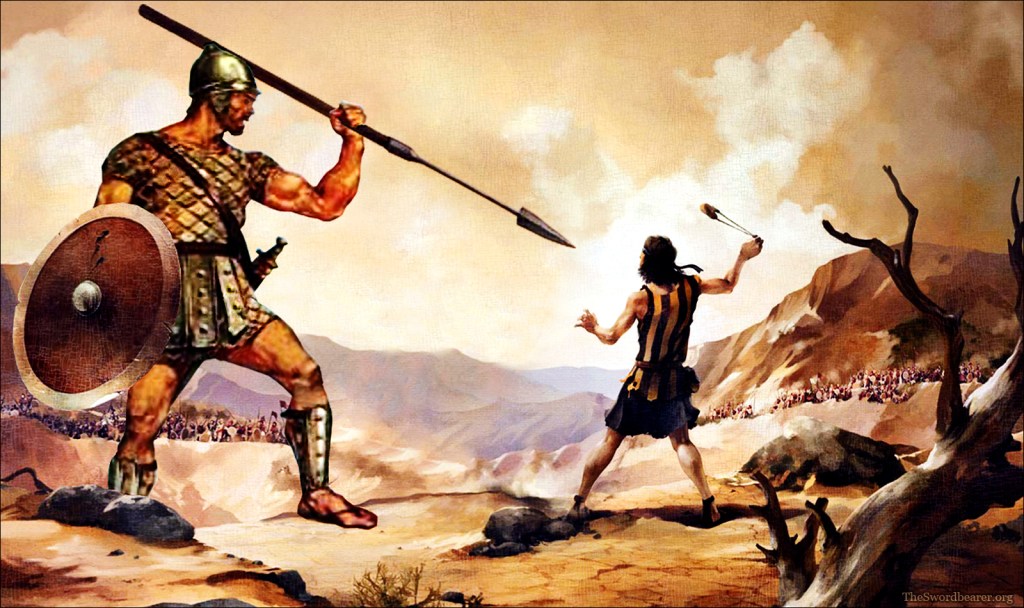
Micah was from Gath; yes, the same place as Goliath. David, as something other than a child, facing Goliath.Brown-Driver-Briggs' Hebrew Definitions, tells us: môrashtı̂y - Morasthite see Moreshethgath = “possession of Gath” 1) an inhabitant of Moresheth. E.W. Bullinger helps to establish the beginnings of Micah's prophetic voice.
“MICAH begins, apparently, a year or two before the end of Jotham’s reign, Isaiah, in that case, had already been prophesying some seventeen or eighteen years.”
By comparing Micah 4:10 with Isaiah 39:5,6, we have another case of similar words occurring in two different prophets. Note that we are told that Micah also functioned during the days of Hezekiah; it may be presumptuous to assume that Micah prophesied to or against Hezekiah as Isaiah did.
Then Isaiah said to Hezekiah, "Hear the word of the LORD of hosts, 'Behold, the days are coming when all that is in your house and all that your fathers have laid up in store to this day will be carried to Babylon; nothing will be left,' says the LORD. 'And some of your sons who will issue from you, whom you will beget, will be taken away, and they will become officials in the palace of the king of Babylon.'" Isaiah 39:5-7 NASB
Continuing with Bullinger's exposition/commentary -
"In this ease, the period covered by Micah and Isaiah was almost exactly the same (cp. Mic_1:1 with Isa_1:1; and see Appdx-77). It is no wonder that the circumstances did call for similar utterances, constituting a confirmation of the Word of Jehovah "by the mouth of two or three witnesses." Both were independent, without any idea of "copying" one from the other, as is alleged by the writer in The Encyclopedia Britannica, eleventh (Cambridge) edition, 1910, 1911, vol. xviii, p. 357, who says: "it is impossible that much, if any, of these chapters (Mic. 4-7) can be ascribed to Micah himself". This is said in the face of the fact that Jeremiah (Mic_26:16-19) definitely quotes and refers to Micah."
Since Bullinger points out how similar Isaiah is to Micah, I choose to give you Isaiah 1:1 here.
The vision of Isaiah, the son of Amoz concerning Judah and Jerusalem, which he saw during the reigns of Uzziah, Jotham, Ahaz and Hezekiah, kings of Judah. Isaiah 1:1 NASB
Some notable differences would be Isaiah's reference to King Uzziah, something Micah did not do. Both are speaking toward Judah and Jerusalem; however, Micah chooses to use the term Samaria, which was the capital of the Northern kingdom.
I want to add one more thing here –
I have come to understand the Jewish concept of prophecy, and it does not include the flash and pizzazz we have become accustomed to. Prophecy is repeated patterns to the Jew, and the idea of two or three witnesses is an essential part of the verification process.
The ISBE defines Uzzi'ah for us – His name means the (strength of Jehovah). King of Judah B.C. 809-8 to 757-6. In some passages, his name appears in the lengthened form Azariah: After the murder of Amaziah, his son Uzziah was chosen by the people, at the age of sixteen, to occupy the vacant throne; and for the greater part of his long reign of fifty-two years, he lived in the fear of God, and showed himself a wise, active and pious ruler. He never deserted the worship of the true God, and was much influenced by Zechariah, a prophet who is mentioned only in connection with him. 2Ch_26:5.
Under the reign of Uzziah,
''the southern kingdom was raised to a condition of prosperity which it had not known since the death of Solomon. The end of Uzziah was less prosperous than his beginning. Elated with his splendid career, he determined to burn incense on the altar of God but was opposed by the high priest Azariah and eighty others. See Exo_30:7-8; Num_16:40; Num_18:7. The king was enraged at their resistance, and, as he pressed forward with his censer, he was suddenly smitten with leprosy. This lawless attempt to burn incense was the only exception to the excellence of his administration. 2Ch_27:2. Uzziah was buried "with his fathers," yet apparently not actually in the royal sepulchres. 2Ch_26:23.”
A few other Prophets around this time frame. Isaiah 1:1 NASB The vision of Isaiah, the son of Amoz concerning Judah and Jerusalem, which he saw during the reigns of Uzziah, Jotham, Ahaz and Hezekiah, kings of Judah. Obadiah 1:1-2 NASB The vision of Obadiah. Thus says the Lord GOD concerning Edom--We have heard a report from the LORD, And an envoy has been sent among the nations saying, "Arise and let us go against her for battle"-- 2 "Behold, I will make you small among the nations; You are greatly despised. Nahum 1:1-3 NASB The oracle of Nineveh. The book of the vision of Nahum the Elkoshite. 2 A jealous and avenging God is the LORD; The LORD is avenging and wrathful. The LORD takes vengeance on His adversaries, And He reserves wrath for His enemies. 3 The LORD is slow to anger and great in power, And the LORD will by no means leave the guilty unpunished. In whirlwind and storm is His way, And clouds are the dust beneath His feet.
The Word from Micah is concerning Samaria and Jerusalem.
In considering Samaria, I am reminded of the hatred and racism that we see in the gospels, as the Jews would walk the longest way just so that they would not have to pass through Samaria. And then there was the interaction Jesus had with the Samaritan woman at the well. That well was within Samaria, and her comments pointed out some of the hatred and prejudice she lived with on a daily basis.
Names that are mentioned: Jotham, Ahaz, and Hezekiah, several of which were Kings of Judah.
The reason I emphasize the names is that they may give us some insight into why the Word came. Keep in mind; nothing is random or by accident; and, you cannot separate the Word given from the human emotions that are a part of the speaker, in this case, Micah. The idea here is to find the link and possibly the reasons behind the “Word” given by Micah.
Jotham
The ISBE tells us that Jotham was the - Twelfth king of Judah, son of Uzziah and Jerusha, daughter of Zadok (2Ki_15:32-38; 2Ch_27:1-9).
Jotham was 25 years of age at the time of his father's attack of leprosy and was at once called upon to take the administration of the kingdom (2Ki_15:5; 2Ch_26:21). In doing this, he not only judged the people of the land by presiding at the administration of justice but also was over the household of the king, showing how complete was the isolation of his father. He was thus king in all but name and is invariably spoken of as reigning in Jerusalem. His reign lasted for 16 years (2Ki_15:33; 2Ch_27:1), 759-744 (others put later). While the father loved husbandry and had much cattle (2Ch_26:10) - external affairs with which he could occupy himself in his retirement - to the son fell the sterner duties and heavier responsibilities of the state.
Ahaz
Again we turn to the ISBE.
“The name is the same as Jehoahaz; hence appears on Tiglath-pileser's Assyrian inscription of 732 bc as Ia-u-ha-zi. The sacred historians may have dropped the first part of the name in consequence of the character of the king.” Ahaz was the son of Jotham, king of Judah. He succeeded to the throne at the age of 20 years (according to another reading 25). The chronology of his reign is difficult, as his son Hezekiah is stated to have been 25 years of age when he began to reign 16 years after (2Ki_18:2). If the accession of Ahaz be placed as early as 743 bc, his grandfather Uzziah, long unable to perform the functions of his office on account of his leprosy (2Ch_26:21), must still have been alive. (Others date Ahaz later, when Uzziah, for whom Jotham had acted as regent, was already dead.)
“Although so young, Ahaz seems at once to have struck out an independent course wholly opposed to the religious traditions of his nation. His first steps in this direction were the causing to be made and circulated of molten images of the Baalim, and the revival in the valley of Hinnom, south of the city, of the abominations of the worship of Moloch (2Ch_28:2, 2Ch_28:3). He is declared to have made his own son “pass through the fire” (2Ki_16:3); the chronicler puts it even more strongly: he “burnt his children in the fire” (2Ch_28:3). Other acts of idolatry were to follow.” [These acts are spelled out in detail in 2Chronicles 28.]
Hezekiah
Hezeki'ah.(the might of Jehovah). The ISBE informs us that he was the twelfth king of Judah, son of the apostate, Ahaz and Abi or Abijah, ascended the throne at the age of 25, B.C. 726. Hezekiah was one of the three most perfect kings of Judah. 2Ki_18:5. Sir_49:4. His first act was to purge, repair and reopen, with splendid sacrifices and perfect ceremonial, the Temple. He also destroyed a brazen serpent, said to have been the one used by Moses, in the miraculous healing of the Israelites, Num_21:9, which had become an object of adoration.”
“He refused to acknowledge the supremacy of Assyria. 2Ki_18:7. The instant war was imminent Hezekiah used every available means to strengthen himself. 2Ki_20:20.”
“It was probably at this dangerous crisis in his kingdom, that we find him sick and sending for Isaiah, who prophesies death as the result. 2Ki_20:1. Hezekiah's prayer for longer life is heard. The prophet had hardly left the palace when he was ordered to return and promise the king immediate recovery and fifteen years more of life. 2Ki_20:4. An embassy coming from Babylon ostensibly to compliment Hezekiah on his convalescence, but really to form an alliance between the two powers, is favorably received by the king, who shows them the treasures which he had accumulated. For this, Isaiah foretells the punishment that shall befall his house. 2Ki_20:17.”